Zelensky and European Allies Outline Five Conditions for Ukraine Peace Talks

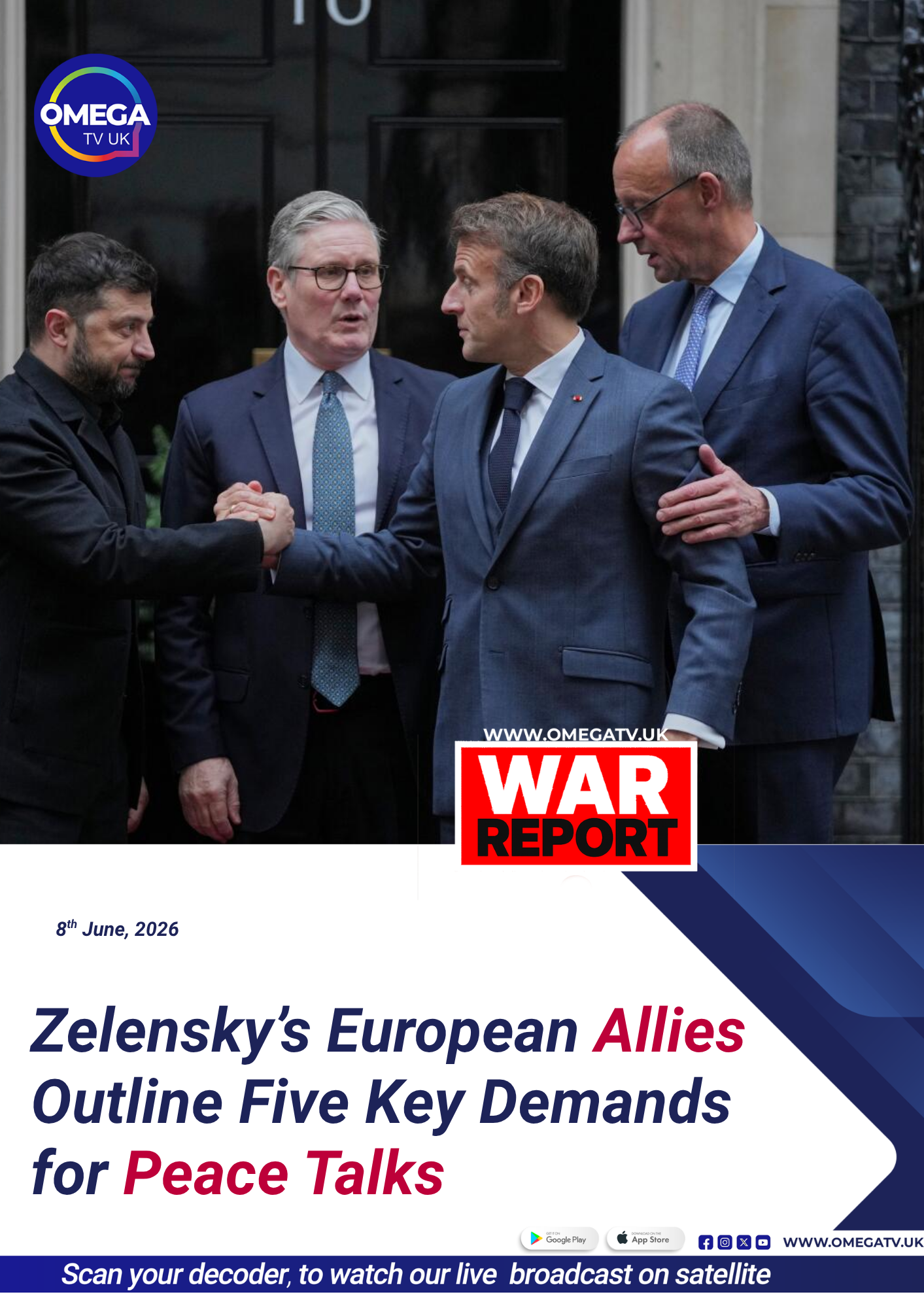
Ukrainian President Volodymyr Zelensky and key European allies have agreed on five major conditions aimed at achieving what they described as a “just and lasting” peace deal to end the war between Ukraine and Russia. The agreement was reached during high-level talks held in London involving the leaders of the UK, France, and Germany.
In a joint statement released after the meeting, Zelensky, UK Prime Minister Sir Keir Starmer, French President Emmanuel Macron, and German Chancellor Friedrich Merz reaffirmed their strong support for Ukraine amid the ongoing conflict with Russia.
The leaders said the proposed peace framework includes an immediate stop to the fighting, direct negotiations based on the current battlefield situation, and strong long-term security guarantees for Ukraine. They also stressed the importance of continued involvement from the United States in any future peace process.
The talks come at a time when global attention has partly shifted toward tensions involving Iran, while fighting between Russia and Ukraine continues to intensify. Russia has recently increased missile and drone attacks on Ukrainian cities, while Ukraine has demonstrated its ability to strike deep inside Russian territory using advanced drone technology.
On Saturday, Ukrainian drones reportedly struck Russia’s second-largest city, St Petersburg, during a major economic forum attended by Russian officials. Earlier attacks also targeted areas near the city, located hundreds of kilometers away from Ukraine’s border, marking one of Kyiv’s deepest drone operations since the war began.
Before the London meeting, Zelensky publicly called on Russian President Vladimir Putin to begin direct peace negotiations, though Moscow has repeatedly rejected such proposals. Putin has maintained that Russia will only end the war once its strategic goals are achieved.
The European leaders also backed Ukraine’s right to choose its own security alliances, an apparent response to Russia’s opposition to Ukraine joining NATO. The UK and France continue to lead the “coalition of the willing,” a group supporting future security guarantees for Ukraine.
Meanwhile, tensions escalated further after Ukraine accused Russia of carrying out a drone strike near the Chornobyl nuclear plant. Ukrainian officials said the attack damaged a storage facility for spent nuclear fuel, though radiation levels remained stable and no injuries were reported.
Authorities also confirmed that at least three people were killed in Russian strikes near Zaporizhzhia in southern Ukraine. Ukrainian officials described the attack near Chornobyl as a deliberate threat to nuclear safety, while Zelensky condemned the strike as “vile.”