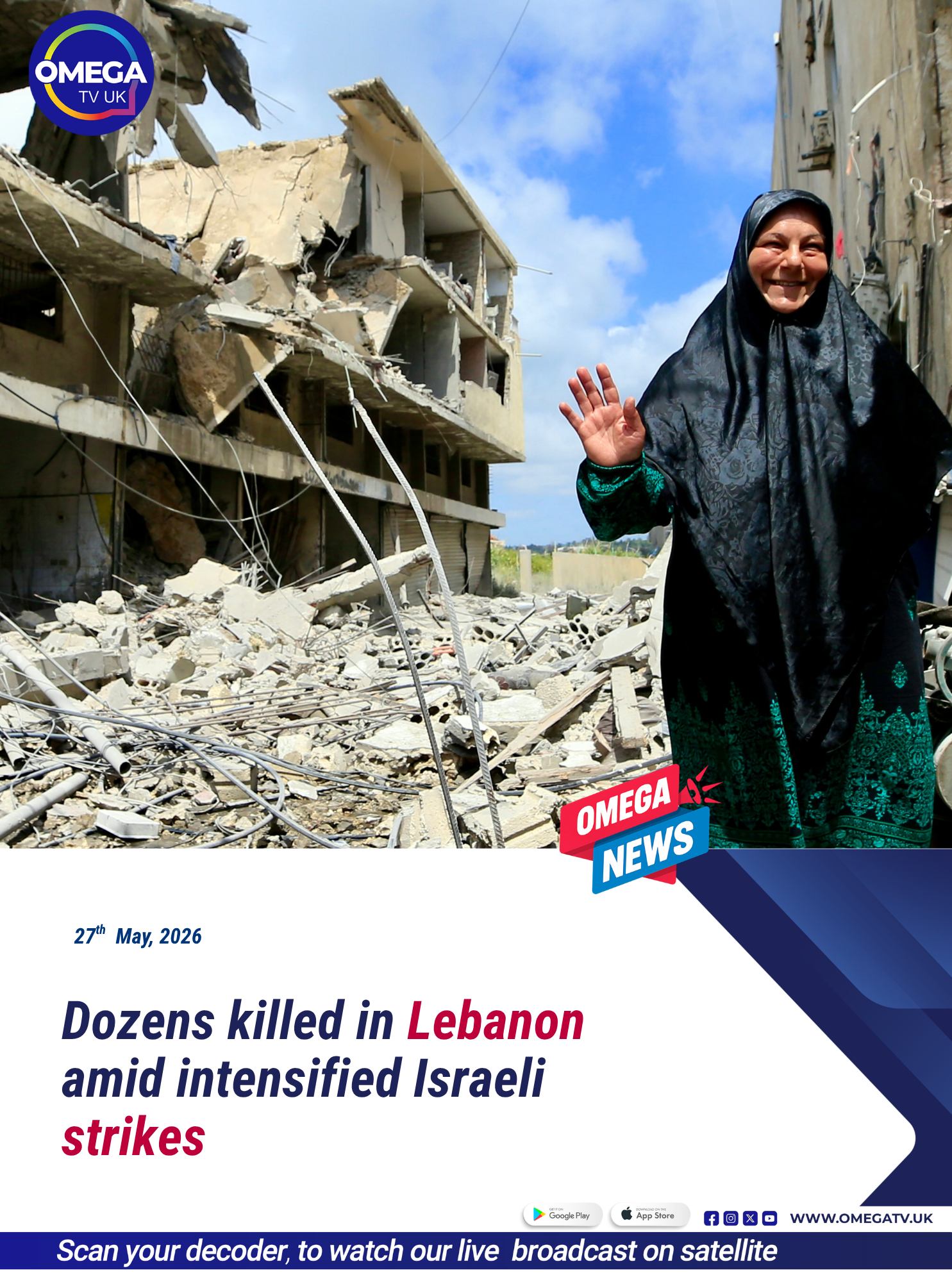
Dozens of people were killed across southern and eastern Lebanon after Israel launched one of its heaviest waves of strikes since the April ceasefire, dramatically escalating tensions with Hezbollah.

Lebanon’s health ministry said at least 31 people, including several children, were killed during the bombardment. The Israeli military said it targeted more than 100 Hezbollah infrastructure sites and fighters overnight.
The escalation came after Israeli Prime Minister Benjamin Netanyahu vowed to intensify military operations against Hezbollah, saying Israel would “press the pedal even harder” in its campaign.
Speaking during a security cabinet meeting, Netanyahu said Israeli forces were deepening operations in Lebanon and strengthening what he described as a “security zone” along the border to protect northern Israeli communities from Hezbollah attacks.
The Israeli military later reported that a projectile launched from Lebanon landed in northern Israel early Wednesday, though no injuries were reported.
Airstrikes hit several areas across Lebanon, including the Bekaa Valley village of Mashghara and parts of southern Lebanon near Burj al-Shamali. Local media also reported strikes near the historic Beaufort Castle, a UNESCO-recognised medieval fortress.
In Mashghara, several homes were destroyed overnight. Rescue teams recovered the bodies of 11 people, including a woman and two children, while 15 others were injured.
Among the survivors was seven-year-old Mohammed, who was rescued from beneath the rubble after the strike killed his father and two sisters.
The Israeli military released footage it said showed strikes on Hezbollah infrastructure and claimed several fighters were eliminated during the operation.
Israel also issued fresh evacuation warnings across parts of Lebanon, accusing Hezbollah of repeatedly violating the ceasefire agreement reached in April.
Hezbollah said it responded by targeting Israeli military positions in northern Israel, describing the attacks as retaliation for Israeli ceasefire violations.
The conflict continues to threaten wider regional stability as negotiations involving the US, Israel and Iran remain fragile amid repeated cross-border attacks.