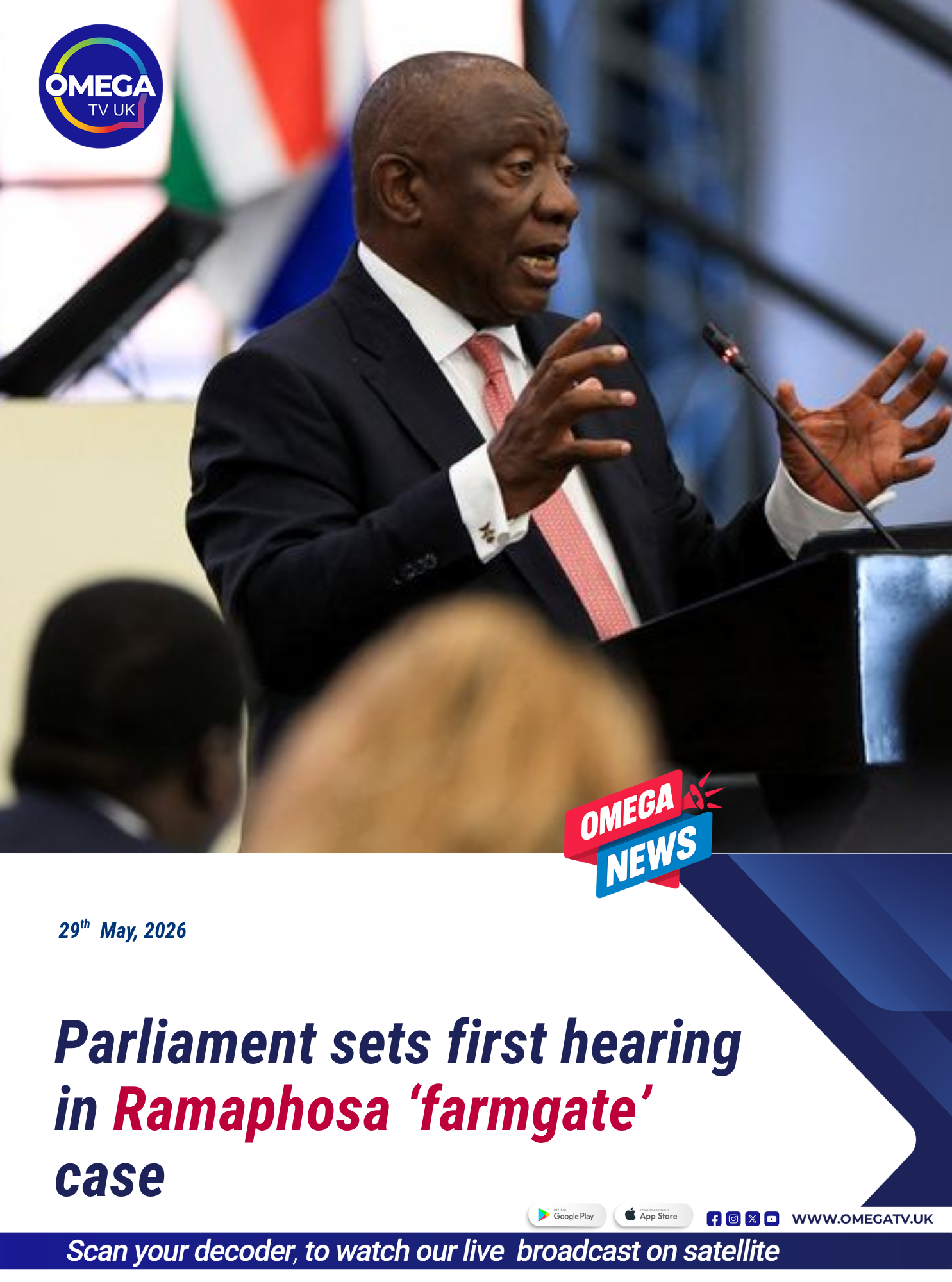
South Africa’s Parliament is set to hold the first meeting of a special impeachment committee on Monday as proceedings linked to President Cyril Ramaphosa’s controversial “Farmgate” scandal move forward once again. The development follows a recent Constitutional Court ruling that revived the impeachment process, placing renewed political pressure on the president and his governing African National Congress (ANC).

The scandal, which has shadowed Ramaphosa’s presidency for years, centres on the theft of a large amount of US dollars hidden inside furniture at his Phala Phala game farm in Limpopo in 2020. The revelation triggered widespread controversy and raised serious questions about the source of the money, why it was allegedly concealed in a sofa, and whether proper procedures were followed after the theft occurred.
Ramaphosa has consistently denied any wrongdoing and insists the money came from the legal sale of game animals at the farm. However, opposition parties argue that the incident damaged public trust and exposed possible misconduct at the highest level of government.
The newly formed 31-member parliamentary committee will begin its work by electing a chairperson. The Democratic Alliance (DA), the second-largest party in the coalition government, has already indicated that it strongly opposes an ANC member leading the committee.
DA chief whip in the National Council of Provinces, George Michalakis, said the launch of the committee was an important step towards accountability. He welcomed Parliament’s decision to proceed with the process but stressed that the committee’s credibility would depend on its independence and fairness.
The DA has been one of the strongest voices pushing for Ramaphosa to face consequences over the scandal. Although the party currently shares power with the ANC in the Government of National Unity, tensions between the two parties remain high over issues of governance, corruption and accountability.
Parliament and Ramaphosa’s office both declined to comment publicly ahead of the committee’s first meeting.
Meanwhile, Ramaphosa has launched a legal challenge against the findings of an independent parliamentary panel that previously concluded there was preliminary evidence suggesting he may have violated the Constitution or committed serious misconduct.
Legal experts believe the president’s court application could significantly delay the impeachment proceedings. Ramaphosa has also warned that he may seek an urgent court order to suspend the process entirely if Parliament continues while the matter is still before the courts.
The impeachment process faces major political hurdles despite the renewed attention around the case. The ANC still holds roughly 40% of seats in the National Assembly and is expected to rally behind Ramaphosa if the matter eventually proceeds to a parliamentary vote.
Under South African law, removing a president through impeachment requires the support of at least two-thirds of Parliament, making it unlikely that opposition parties alone could secure Ramaphosa’s removal from office.
The ANC leadership has repeatedly defended Ramaphosa and maintained that he has done nothing wrong. Senior party officials argue that the scandal has been politically weaponised by opponents seeking to weaken the president ahead of future elections.
Nevertheless, analysts say the revival of the impeachment process keeps the “Farmgate” controversy firmly in the public spotlight at a time when the ANC is already facing declining electoral support, coalition pressures and growing public frustration over corruption and economic challenges.
The special committee’s work is expected to become one of the most closely watched political developments in South Africa over the coming months as Parliament navigates the legal and political battle surrounding one of the country’s biggest post-apartheid scandals.