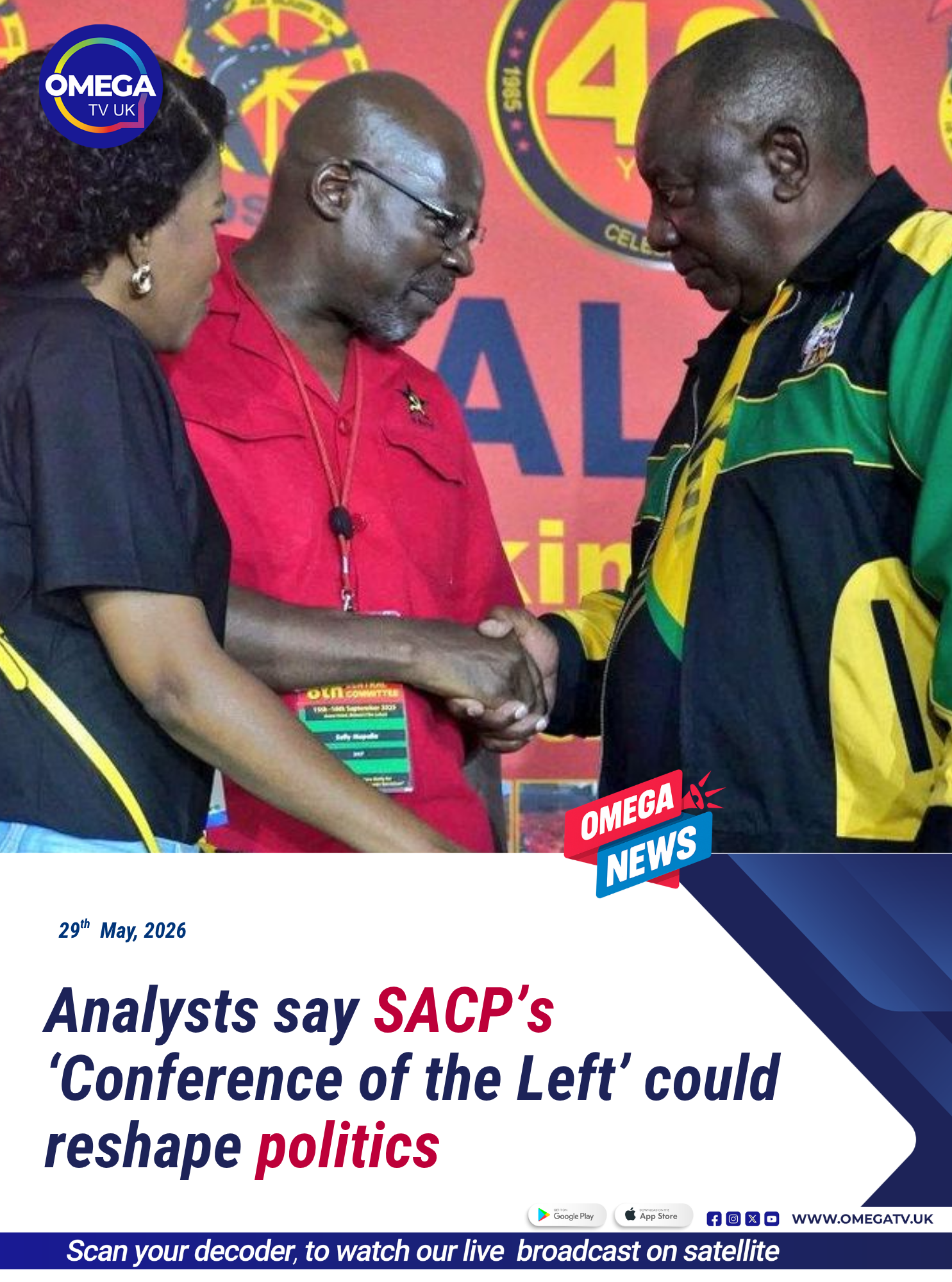
Political analysts believe the South African Communist Party’s upcoming “Conference of the Left” could become a defining moment in the country’s political future as tensions between the ANC and its alliance partners continue to escalate. The three-day conference, taking place in Boksburg from Friday to Sunday, is expected to bring together leftist political parties, trade unions, activists and civic organisations in what many see as an attempt to reshape working-class politics in South Africa.

The SACP says the conference is aimed at strengthening unity among leftist formations, promoting political education and coordinating action around issues affecting workers and poor communities. However, the gathering has already triggered a political clash after the ANC publicly rejected the conference, insisting that it does not represent a genuine leftist movement.
ANC secretary-general Fikile Mbalula dismissed the event earlier this week, saying the ANC did not believe the conference reflected the values or composition of the left. His comments further exposed growing tensions between the governing party and the SACP, which have intensified since the formation of the Government of National Unity after the 2024 general election.
The SACP has strongly criticised the ANC’s decision to govern alongside parties such as the DA and FF Plus, arguing that the GNU no longer represents the interests of the working class or poor black communities. The communist party has also announced plans to contest future elections independently while maintaining that it is still part of the tripartite alliance alongside the ANC and Cosatu.
Political analyst Dr Bernard Sebake said the conference could serve as a platform for leftist organisations to redefine their political agenda and challenge what they view as the ANC’s growing shift towards centrist and neoliberal politics. According to Sebake, many within the left believe the original goals of the democratic revolution have been weakened and that the working class has been abandoned.
He added that the SACP’s decision to host the conference reflects frustrations over the alliance’s inability to address economic inequality, unemployment and worsening living conditions for ordinary South Africans. Sebake believes the gathering could lead to broader political cooperation between organisations that share opposition to the ANC’s current direction.
Several political formations are expected to attend the conference, including the EFF, MK Party, PAC, Azapo, trade unions and civil society organisations. EFF leader Julius Malema, MK Party chairperson Nathi Nhleko and Afrika Mayibuye Movement leader Floyd Shivambu are among those expected to address delegates during the event.
Analysts say the presence of opposition parties such as the EFF and MK Party could increase pressure on the ANC, especially as its electoral dominance continues to weaken. Some observers believe the conference may lay the foundation for a broader leftist coalition ahead of the 2026 local government elections.
Cosatu has confirmed its participation in the conference, viewing it as an opportunity to raise concerns around workers’ rights, wages and economic inequality. However, Saftu announced that it would not participate.
Another political analyst, Solly Rashilo, said the ANC’s refusal to attend the conference signals that trust within the tripartite alliance has reached one of its lowest points since democracy began. He warned that continued ideological divisions could eventually threaten the survival of the alliance itself.
Rashilo argued that the conference represents more than just a political gathering. He said it could become a testing ground for a new political realignment focused on anti-austerity measures, economic transformation and the protection of working-class interests.
As political tensions rise, the “Conference of the Left” is increasingly being viewed as one of the most significant political developments in South Africa’s evolving post-2024 political landscape.