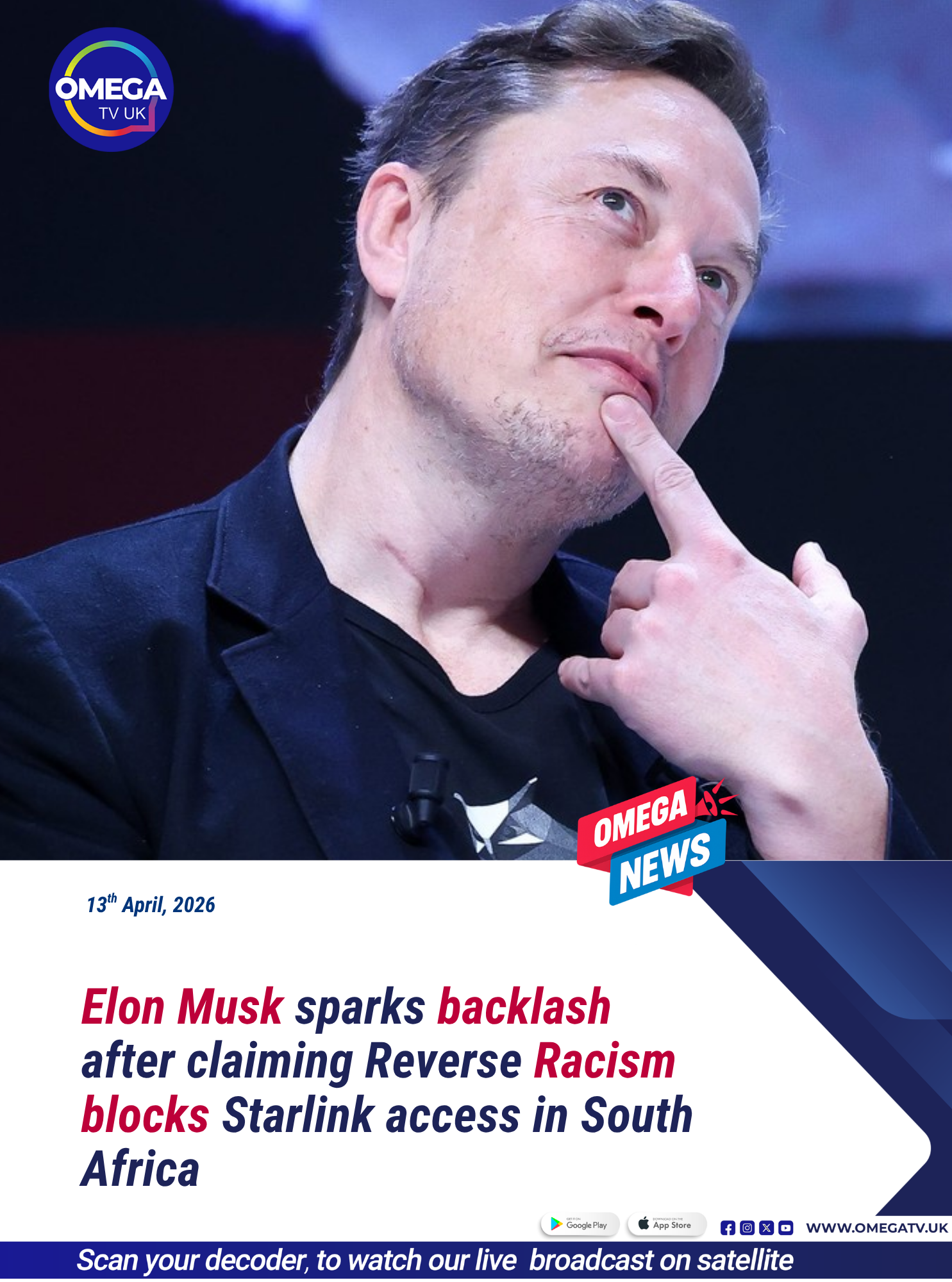
Elon Musk faces backlash in South Africa after claiming “reverse racism” blocks Starlink approval

Tech billionaire Elon Musk has sparked intense backlash in South Africa after accusing authorities of blocking his satellite internet service, Starlink, from operating in the country due to what he described as “reverse racism.”
Musk, who was born in South Africa, made the claims on his social media platform X, alleging that regulators had repeatedly denied Starlink a licence based on racial considerations rather than technical or legal requirements.
In his post, Musk wrote that South Africa had refused to grant Starlink approval “simply because I am not Black,” and claimed the company had been offered opportunities to bypass restrictions through what he described as unethical means. He said he refused to engage in such practices, insisting that compliance should not require what he called misrepresentation of ownership structure.
He further accused unnamed officials of racism and criticised the country’s regulatory environment, urging that those responsible be “shunned” internationally. The comments quickly went viral, drawing strong reactions both in South Africa and globally.
South Africans responded swiftly online, with many users rejecting Musk’s claims and defending the country’s telecommunications licensing framework. Critics argued that the issue is not race-based discrimination but compliance with South Africa’s local ownership and regulatory requirements for foreign companies operating in strategic sectors.
Several commentators pointed out that foreign telecommunications firms are required to meet Black Economic Empowerment (BEE) standards, which aim to address historical inequality by ensuring broader participation in the economy. They argue that Starlink’s licensing challenges stem from these rules rather than racial bias.
Others accused Musk of spreading misinformation and misrepresenting the regulatory process. Some users also referenced South Africa’s broader economic landscape, noting that many international companies operate successfully in the country while adhering to local laws.
The dispute has reignited debate over South Africa’s economic transformation policies and the balance between attracting foreign investment and addressing historical inequalities. The regulatory framework requires foreign companies in certain sectors to partner with local stakeholders or meet ownership requirements designed to broaden economic participation.
Analysts say the Starlink case highlights the tension between global tech expansion and national regulatory sovereignty, particularly in emerging markets where governments maintain strict rules over strategic infrastructure.
This is not the first time Musk has criticised South African policy. In previous years, he has made public comments on the country’s political and social environment, sometimes drawing controversy for his framing of racial and governance issues.
The latest remarks also come amid wider geopolitical discussions involving Musk’s business empire, including Tesla and SpaceX, both of which operate across multiple regulatory environments worldwide.
Observers note that satellite internet services like Starlink are increasingly seen as critical infrastructure, especially in rural or underserved regions where traditional broadband access is limited. This makes licensing decisions politically and economically sensitive.
The South African government has not issued a detailed public response to Musk’s latest comments, but regulatory officials have previously maintained that all telecommunications providers must comply with national laws and licensing conditions, regardless of their size or global influence.
Public debate has also been intensified by Musk’s broader political commentary in recent years, including his alignment with controversial narratives about South Africa’s racial dynamics. These positions have drawn criticism from both domestic and international observers who argue they oversimplify complex social and historical realities.
Supporters of Musk, however, argue that South Africa’s regulatory system may discourage innovation and foreign investment, particularly in fast-moving technology sectors. They say that satellite internet access could provide significant benefits to remote communities if regulatory barriers were reduced.
At the centre of the dispute remains a fundamental disagreement over whether South Africa’s licensing requirements constitute fair economic policy or unfair discrimination. The issue is likely to continue attracting attention as Starlink expands into more global markets.
For now, the controversy highlights the growing intersection of technology, politics, and national regulation, with Musk once again at the centre of a global debate.