Fear and grief spread through Rwampara as Ebola outbreak worsens in DR Congo
Fear and mourning have gripped the eastern Congolese town of Rwampara as families continue to lose loved ones during the Democratic Republic of Congo’s latest Ebola outbreak, which health officials warn is still rapidly spreading.

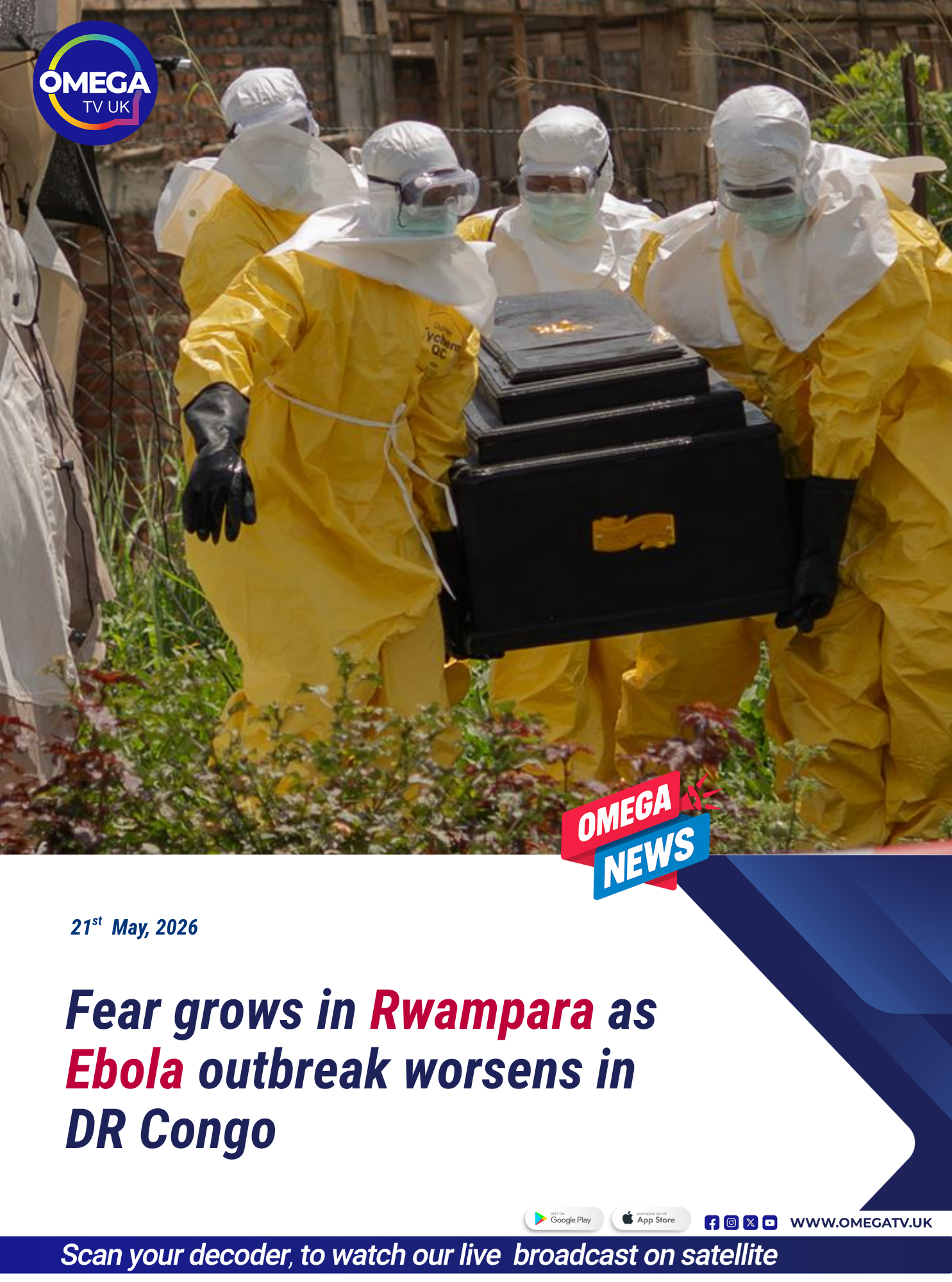
At Rwampara General Hospital, healthcare workers dressed in full protective gear carried bodies into disinfected coffins while grieving relatives watched in anguish, reflecting the growing human toll of the outbreak.
Among the mourners was Botwine Swanze, who described the painful final moments of her son after he suddenly fell ill with symptoms that escalated rapidly.
“He told me his heart hurt, and I thought it was his stomach,” she said. “Then he started crying because of the pain in his stomach. After that, he started vomiting. Then he started bleeding and vomiting a lot.”
Nearby, another resident, Alicama Bitunda, mourned both her niece’s child and later her niece herself after what initially appeared to be malaria-like symptoms developed into a deadly illness.
“She began vomiting and had diarrhea,” Bitunda said. “Her throat became hot, and then her stomach swelled, and that’s how she died.”
The outbreak has triggered growing international concern after the World Health Organization declared it a Public Health Emergency of International Concern.
WHO officials say the current outbreak involves the rare Bundibugyo strain of Ebola, which circulated undetected for weeks because early testing focused on a more common Ebola strain and initially returned negative results.
According to WHO Director-General Tedros Adhanom Ghebreyesus, there are currently 51 confirmed cases in the Democratic Republic of Congo and two confirmed cases in neighboring Uganda.
Health authorities have also reported approximately 139 suspected deaths and nearly 600 suspected infections, though officials fear the real number could be significantly higher.
The outbreak is concentrated in Ituri and North Kivu provinces in eastern Congo, regions already struggling with years of armed conflict, displacement, and fragile healthcare systems.
This marks the Democratic Republic of Congo’s 17th Ebola outbreak, but experts say the Bundibugyo strain presents unique difficulties because it is far less understood than the Zaire strain, which has caused previous epidemics in the region.
There is currently no approved vaccine specifically designed for the Bundibugyo species, although experimental vaccines are being studied. Treatment options are also more limited compared to other Ebola strains.
At Rwampara General Hospital, emergency preparations are underway to establish a dedicated Ebola treatment center inside a large tent being erected in the hospital courtyard.
Medical teams hope isolating patients there will help reduce transmission inside healthcare facilities, where infection risks remain high.
However, aid workers warn the outbreak is continuing to spread across multiple communities.
Hama Amado, field coordinator for the humanitarian organization ALIMA — the Alliance for International Medical Action — described the situation as deeply concerning.
“The situation is worrying because this is getting widespread,” he said. “This is spreading in many areas. So everyone must mobilize.”
Local health officials say contact tracing and active case detection efforts are ongoing, but the outbreak remains far from contained.
John Muhito, chief medical officer for the Rwampara health zone, acknowledged that authorities are still identifying new cases in both villages and healthcare facilities.
“At present, the situation is not yet under control,” Muhito said. “There are still a lot of detections.”
The outbreak has revived painful memories of previous Ebola epidemics in eastern Congo, where conflict, mistrust, and weak infrastructure have repeatedly complicated response efforts.
Humanitarian agencies are now warning that without stronger containment measures, expanded medical resources, and faster international support, the outbreak could worsen significantly in the coming weeks.
As fear spreads through affected communities, families in Rwampara continue to mourn loved ones while healthcare workers race to stop the deadly virus from advancing further.