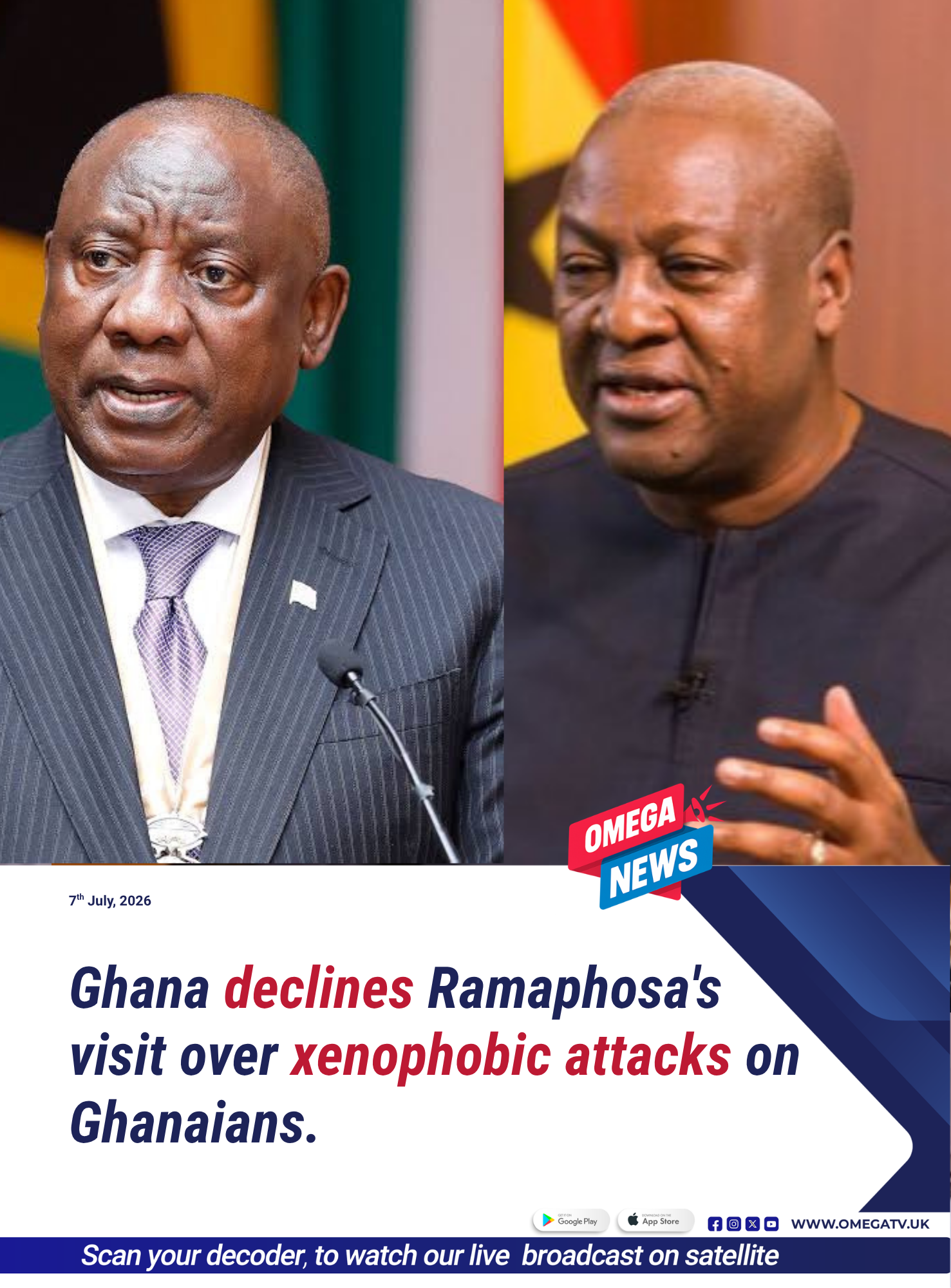
Ghana has declined a request for a state visit by South African President Cyril Ramaphosa, citing growing concern over xenophobic attacks that have targeted Ghanaian nationals living in South Africa.

According to diplomatic sources cited by the Daily Graphic in both Accra and Pretoria, the decision follows a fresh wave of anti-foreigner violence across parts of South Africa. The unrest has already prompted the repatriation of roughly 1,000 Ghanaians, with another 900 reportedly registered to return home.
Tensions escalated further after Ghana reported that one of its nationals was killed on June 30, at what it described as the peak of demonstrations by xenophobic groups targeting African migrants. South Africa has firmly rejected that account. Officials there say the victim was shot a day earlier, on June 29, in an extortion-related attack at a barbershop in Nyanga, Cape Town — and that the incident had nothing to do with the protests. South Africa’s Ministry of Justice went further, describing Ghana’s version of events as “factually incorrect,” pushing the disagreement into a full-blown diplomatic dispute.
A South African source told the Daily Graphic that Ghana’s government “was deeply concerned about the safety and dignity of its citizens in South Africa” and could not move forward with the planned high-level visit, originally scheduled for August, “under the current circumstances.”
A Ghanaian source confirmed the decision, framing it as a matter of principle: protecting citizens abroad, the source said, is “non-negotiable.” Ghanaian officials are also said to be wary of the optics and security risks of hosting President Ramaphosa while public sentiment remains charged, fearing his reception could stir further tension rather than goodwill.
The same source said Ghana has made its position clear to Pretoria, pressing South Africa to take concrete, visible steps to curb the attacks and guarantee the safety of Ghanaian nationals as a condition for any future visit.
Even so, the Ghanaian source was careful to stress that the broader relationship between the two countries “remains cordial,” suggesting the rift is tied to this specific issue rather than a wider breakdown in ties.