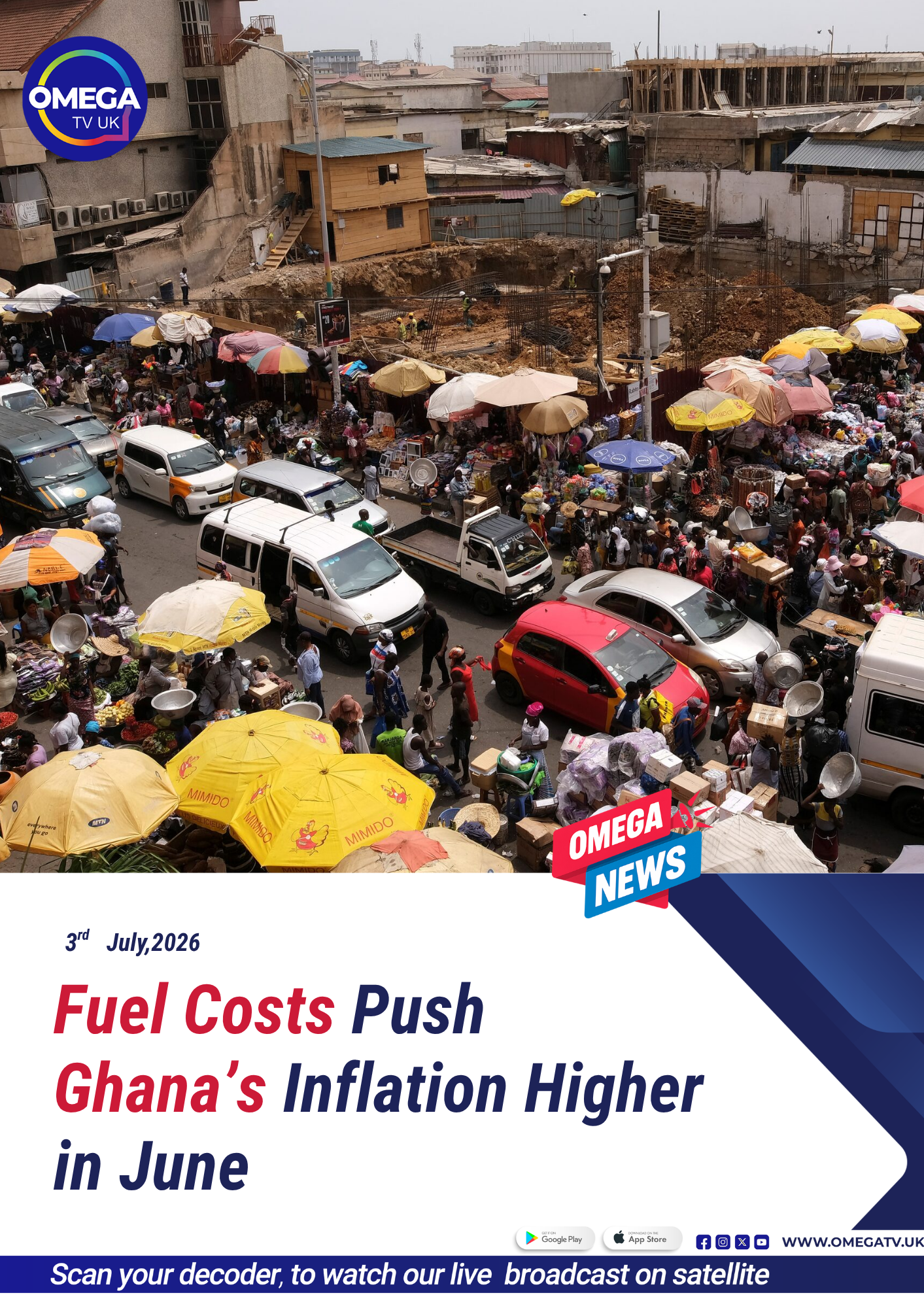
Ghana’s Inflation Climbs in June as Rising Fuel Costs Put Pressure on Economy
Ghana’s annual inflation rate increased sharply in June as persistently high fuel prices continued to push up the cost of living, placing renewed pressure on households and businesses despite the country’s broader economic recovery.

According to the latest figures, inflation rose to 5.3% in June, up from 3.7% in May, marking a significant monthly increase. The rise was largely driven by higher transport costs, rental prices and school fees, with expensive fuel continuing to filter through to other sectors of the economy.
The increase in fuel prices has been linked to disruptions in global energy markets following the conflict involving Iran, which has affected oil prices and increased transportation costs in many countries, including Ghana.
Despite the latest rise, inflation remains well below the 13.7% recorded in June 2025, reflecting the significant progress Ghana has made in stabilising its economy over the past year.
The country’s economy has gradually recovered since entering an International Monetary Fund (IMF) support programme in 2023. The financial assistance followed Ghana’s debt default in 2022 after the combined economic impact of the COVID-19 pandemic and the global fallout from the war in Ukraine placed severe pressure on government finances.
Since then, authorities have implemented a series of fiscal reforms aimed at restoring investor confidence, reducing inflation and strengthening public finances. The improving economic outlook has enabled Ghana to regain access to parts of the domestic financial market.
In April this year, the government returned to the local bond market by issuing a seven-year cedi-denominated treasury bond to help finance the 2026 national budget. The bond sale marked Ghana’s first domestic bond issuance since its debt restructuring process began following the 2022 default.
While the latest inflation figures highlight ongoing challenges, economists say the country’s overall economic indicators remain stronger than they were a year ago. However, continued volatility in global fuel prices and external geopolitical tensions could pose risks to Ghana’s recovery if energy costs remain elevated.
The government and the Bank of Ghana are expected to continue monitoring inflation closely as they seek to maintain economic stability while supporting growth. Policymakers will also be watching global developments that could influence commodity prices and the cost of imports in the months ahead.
Although inflation has edged higher in June, Ghana’s recovery from its recent financial crisis remains on track, with authorities hoping continued reforms and improved market confidence will help keep inflation under control over the long term.