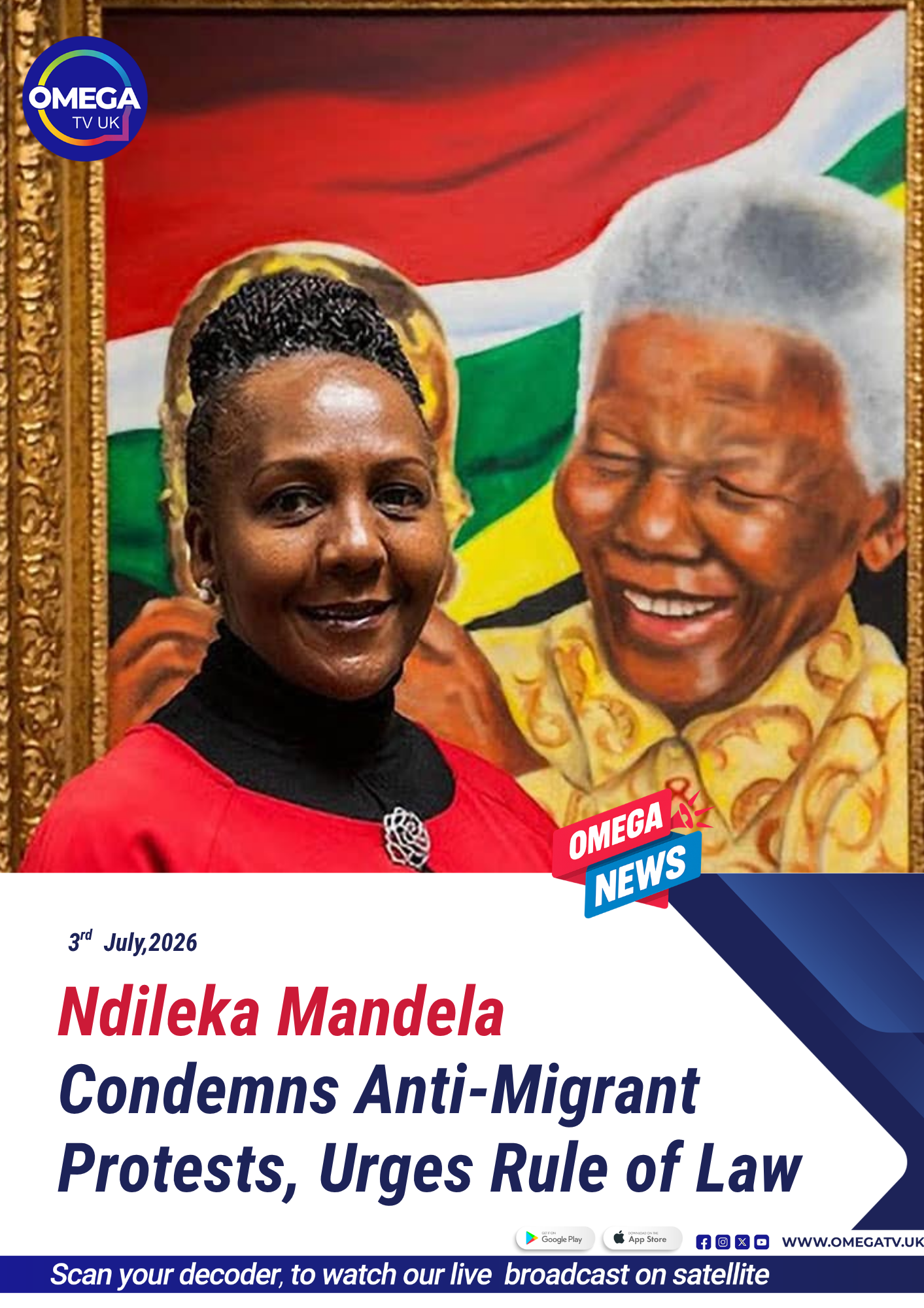
Ndileka Mandela, the granddaughter of South Africa’s first democratic president, Nelson Mandela, has spoken out against the growing wave of anti-migrant protests sweeping across the country, saying her grandfather would never have supported violence or mob justice.

Her remarks come as demonstrations targeting undocumented migrants continue to spread across several South African communities. Protesters have demanded stricter immigration enforcement and called for undocumented foreign nationals to leave the country, arguing that illegal immigration has placed pressure on jobs, public services and local resources.
The protests have, however, escalated in some areas, with reports of violence, intimidation and the displacement of migrant communities. Many foreign nationals have fled their homes or businesses out of fear, while the unrest has strained diplomatic relations between South Africa and several African countries.
Speaking to the BBC’s Newsday programme, Ndileka Mandela reflected on how her grandfather’s legacy would apply to the current situation. She stressed that while Nelson Mandela respected the rule of law and believed governments should enforce immigration policies fairly, he would never have supported communities taking the law into their own hands.
According to Ndileka, Mandela stood firmly for justice, equality and respect for human dignity regardless of nationality. She said her grandfather believed that disputes should be resolved through lawful institutions rather than through violence, intimidation or vigilantism.
She acknowledged that immigration remains a sensitive issue in South Africa and that citizens have legitimate concerns about unemployment, crime and economic hardship. However, she argued that migrants should not be blamed for the country’s broader social and economic challenges.
The anti-migrant demonstrations have reignited debate over South Africa’s immigration system, border security and the government’s handling of undocumented migration. While many protesters insist their campaign is aimed at illegal immigration rather than foreign nationals in general, critics argue that the demonstrations have fuelled xenophobia and placed innocent people at risk.
Human rights organisations have urged authorities to protect vulnerable communities and ensure that law enforcement responds firmly to acts of violence or intimidation. They have also called on political leaders to avoid inflammatory rhetoric that could worsen tensions.
The South African government has repeatedly stated that immigration laws must be enforced through legal processes and has warned against vigilantism. Officials have emphasised that anyone living in the country unlawfully should be dealt with through the justice system rather than by self-appointed groups.
Ndileka Mandela said her grandfather consistently promoted unity over division, reminding South Africans that the country’s democratic values are built on human rights, dignity and equality before the law. She encouraged citizens to seek solutions that uphold those principles instead of allowing fear and anger to drive unlawful actions.
As the debate over immigration continues, South Africa faces the challenge of balancing border security, economic concerns and public safety while preserving the constitutional values that Nelson Mandela helped establish after the end of apartheid. The growing unrest has become a significant test of the country’s commitment to justice, social cohesion and the rule of law.