
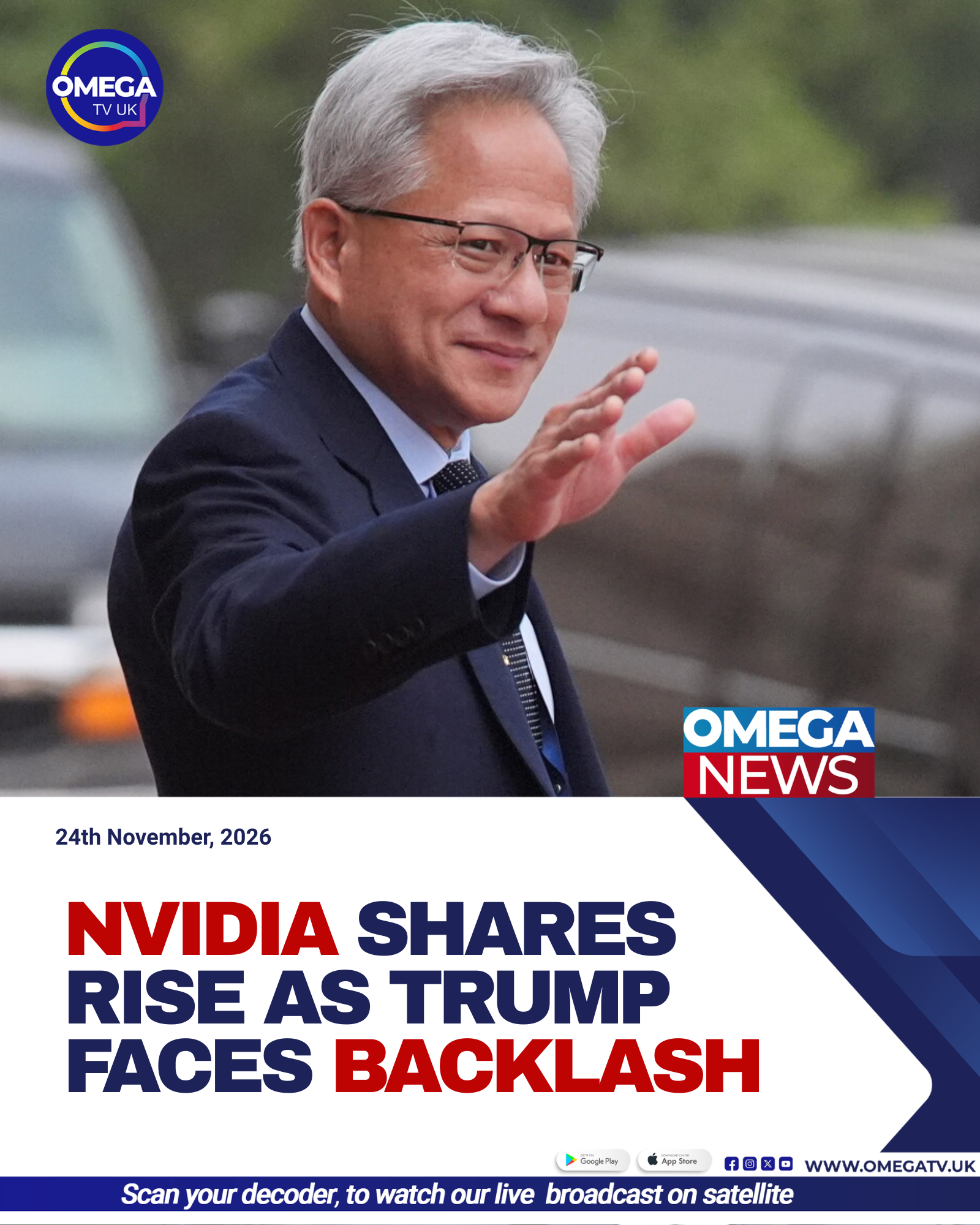
Global stock markets have recorded gains following the return of Jensen Huang as chief executive of technology giant Nvidia, with the company’s shares surging by 31% on Monday and boosting investor confidence across several markets.

The development has had a positive impact on Asian stock markets, while trading across Europe has been more mixed. Nvidia’s recovery has also benefited several companies connected to its supply chain, as investors respond to renewed activity surrounding the technology giant.
Huang’s return to Nvidia headquarters attracted significant attention after footage emerged online showing him being welcomed by cheering employees. During his appearance, he apologised to staff and acknowledged the challenges surrounding his departure, promising to approach his leadership differently.
“I’m going to be a better CEO the second time around,” Huang told employees, as he addressed his return to the company.
His comeback has attracted attention from investors and the wider technology industry, given Nvidia’s important position in the global artificial intelligence and semiconductor markets.
However, the development has also generated political controversy in the United States, particularly over President Donald Trump’s involvement in bringing Huang back to the company.
Trump has claimed responsibility for the arrangement, saying he “made the deal” that facilitated Huang’s return. His comments have prompted criticism from several American politicians, who have raised questions about the circumstances surrounding the agreement and the potential implications.
The controversy has also drawn attention to Trump’s personal financial interests in Nvidia. Reports indicate that the US president purchased millions of dollars worth of Nvidia shares over the past two years.
The White House has responded to concerns about potential conflicts of interest by stating that Trump does not personally manage his stock transactions.
Huang’s return has also attracted scrutiny because of the circumstances that led to his departure from Nvidia. He stepped down after admitting to an affair with an individual alleged to have been a Chinese spy. He was also accused of having an affair with a colleague.
The allegations raised questions about the potential security implications of his position, particularly because Nvidia operates in a strategically important industry involving advanced computer chips and artificial intelligence technology.
Despite the concerns, Trump has defended the decision to allow Huang to return, insisting that the government has no reason to believe his comeback poses a threat to American national security.
The president’s position has added another dimension to the debate, with questions continuing over the relationship between business leadership, national security and political influence.
Nvidia remains one of the most closely watched companies in the global technology sector because of its role in producing advanced processors used in artificial intelligence systems, data centres and other high-performance computing applications.
The latest market reaction highlights the influence of major technology companies on international financial markets, as developments involving their leadership can affect investors, suppliers and businesses across different regions.
While Nvidia’s share price gains have contributed to positive movements in several markets, the political debate surrounding Huang’s return continues to attract attention in Washington.


