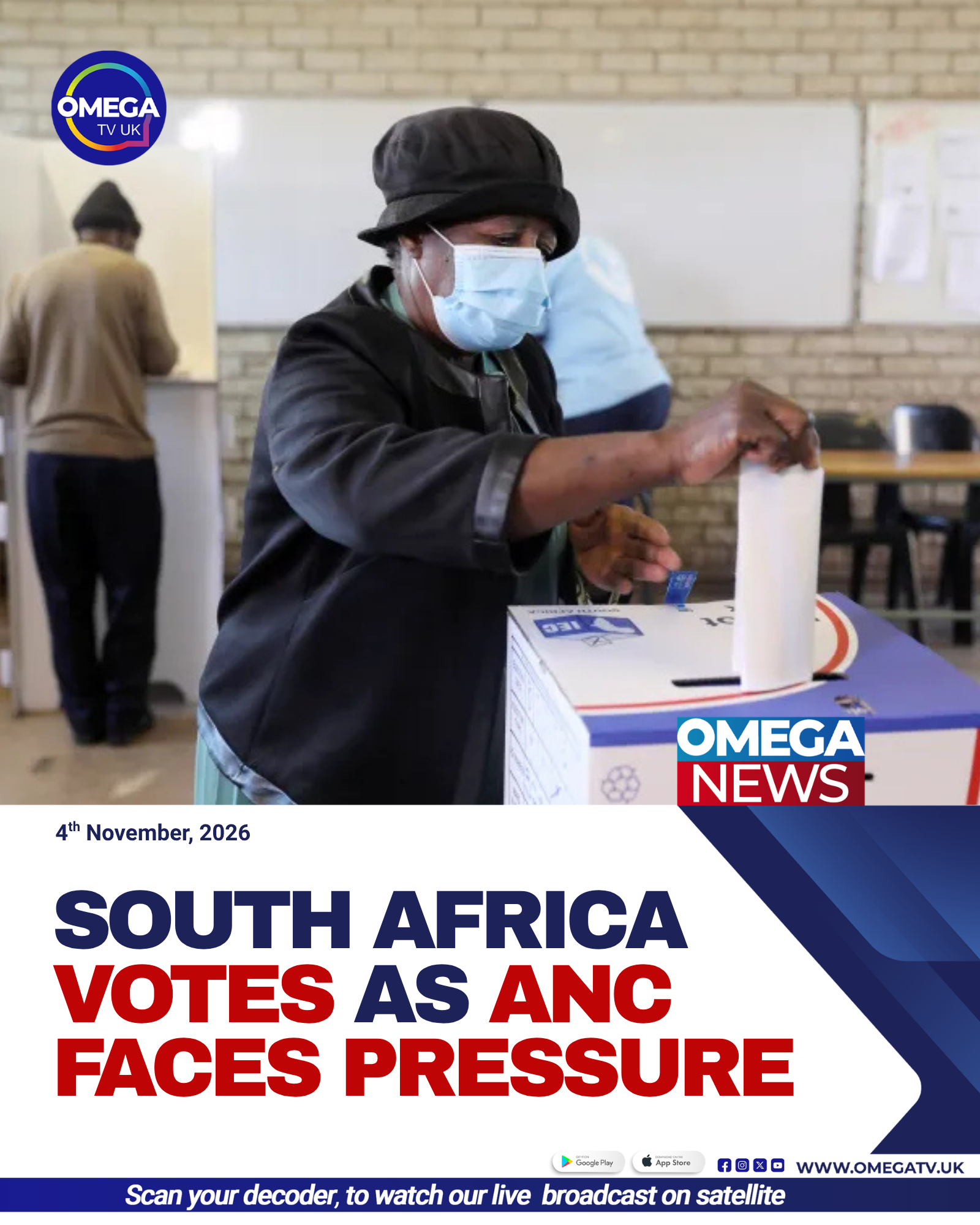
South Africans are voting in local elections as the main political parties fight for power in key cities giving an insight into how the nation feels politically going into 2029’s general election.

Polling stations opened at 7am and will stay open until 9pm.
Of the over 29 million registered voters, however, low voter turnout is a concern after only 46 percent voted in the 2021 municipal elections.
On Tuesday, the Electoral Commission said only 1.4 million of the 2.6 million people who were allowed to vote specially had done so after two days. The election comes at a time of increasing public anger due to poor infrastructure, lack of clean water, inequality and over 30% unemployment.
While the ruling African National Congress (ANC) is expected to be the biggest political party in the country, the party’s support is thought to dip according to opinion polls. The party that led South Africa’s liberation movement lost their majority in national parliament for the first time in 2024 after only gaining just over 40% of votes, entering national unity government alongside nine other parties.
The ANC had a big blow during the 2021 municipal elections where they lost over 50% of their support. The opposition Democratic Alliance (DA), South Africa’s second largest party, are aiming to win control of Johannesburg. The party hopes to capitalise on public anger about poor service provision in the city, traditionally an ANC stronghold.
Former president Jacob Zuma’s uMkhonto weSizwe (MK) party is fighting to win control of the country’s major east coast port city, Durban. MK had a huge breakthrough during the 2024 national election. They gained 14.5% of the vote and came third in the country.
“We are going to start taking back our country here,” Zuma told supporters in Durban on Sunday. There has been a lot of anti-migrant sentiment during the campaign.
Coalition talks likely
Voters are choosing councillors, who will then pick mayors and create local governments. With several key cities not likely to have clear winners, it could come down to coalition talks.
Already 74 of South Africa’s 257 municipalities are run by a coalition government according to the Mapungubwe Institute for Strategic Reflection. Political analyst Kingsley Makhubela said voters are likely to vote for what will improve their daily lives rather than party allegiance.
Access to clean water, electricity, roads and sewage were key issues.”People are not going to vote based on sentiments,” said the former diplomat. He added that a coalition government could lead to more tolerance in politics in a more divided political landscape.
The final results are expected on Sunday and will give an insight into South Africa’s political landscape going into 2029’s general election. It could also affect the ANC’s leadership race. The party is expected to vote for a new leader at their conference in December 2027.