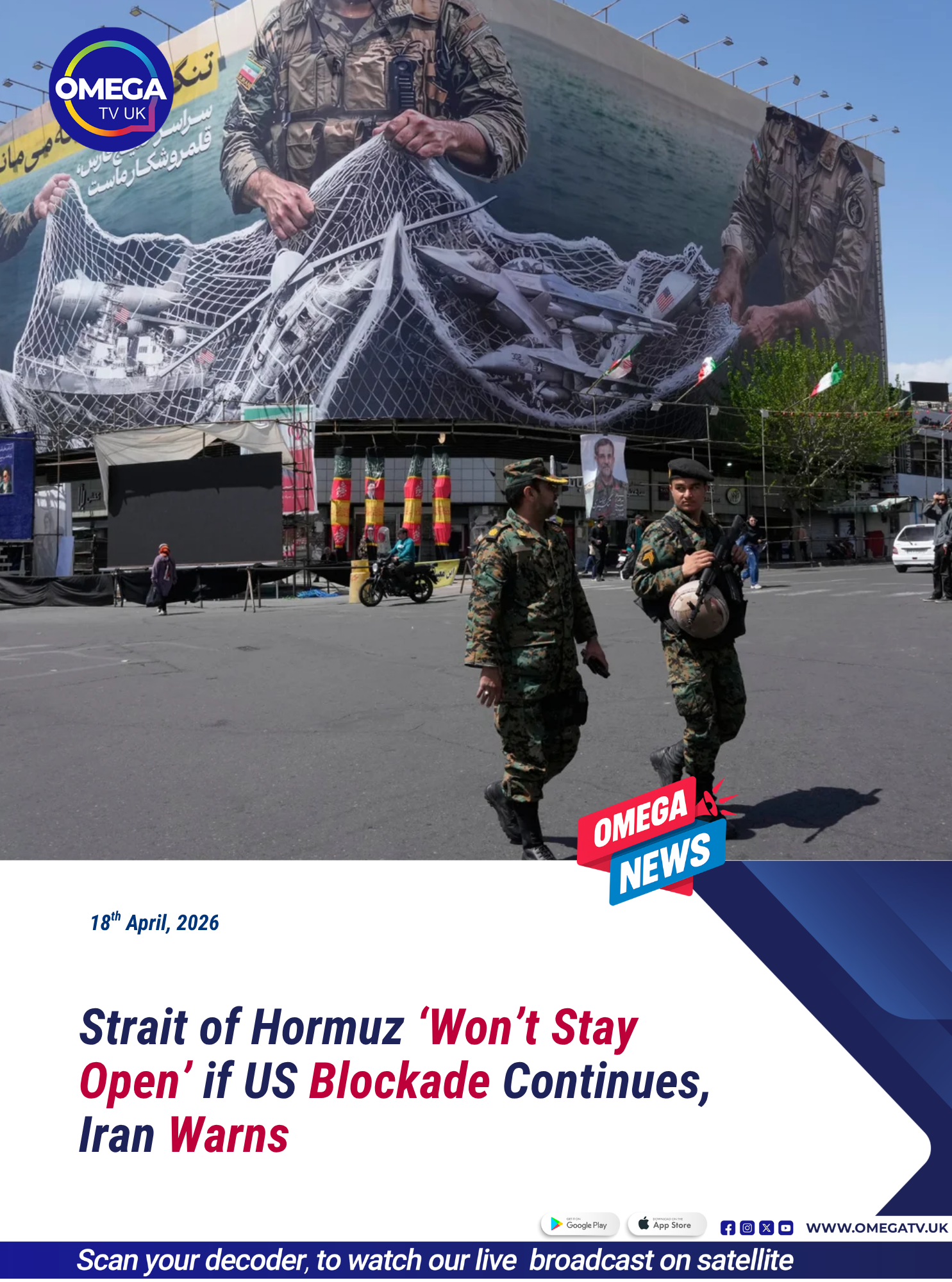
Iran Warns Strait of Hormuz Could Close as US Blockade Tensions Deepen

Tensions between Iran and the United States have escalated sharply after Iranian officials warned that the strategic Strait of Hormuz may not remain open if the ongoing US blockade of Iranian ports continues.
Iran’s parliament speaker issued the warning amid growing uncertainty over the fragile ceasefire currently in place. The Strait of Hormuz, a critical global oil shipping route, handles a significant portion of the world’s energy supplies, making any threat to its operation a major concern for international markets.
The warning comes in response to the United States’ decision to maintain its blockade on Iranian ports. Donald Trump stated that the blockade would remain in effect until a broader peace agreement is reached, emphasising that the waterway itself is “open and ready for business.”
However, conflicting messages from Tehran have added to the confusion. Iran’s foreign minister said the Strait of Hormuz would remain fully open to commercial shipping for the duration of the ceasefire. Shipping data from tracking platforms appears to support this claim, with several oil tankers continuing to pass through the route.
Despite these reassurances, Iranian officials have made it clear that the situation could change quickly if tensions escalate further. The latest warning signals that Iran may consider restricting access to the waterway as leverage in its standoff with Washington.
The situation has been further complicated by disputed claims regarding the terms of a potential agreement. President Trump has suggested that Iran has agreed to major concessions, including the removal of enriched uranium from the country. Iranian authorities, however, have strongly denied these claims, highlighting the lack of clarity in ongoing negotiations.
This contradiction has left analysts and observers struggling to interpret the true state of relations between the two nations. Reports from international correspondents indicate that even officials on the ground acknowledge the situation remains fluid and unpredictable.
The Strait of Hormuz has long been a focal point of geopolitical tension due to its strategic importance. Any disruption to traffic through the narrow passage can have immediate global consequences, particularly for oil prices and supply chains.
Following Iran’s latest announcement, oil markets reacted swiftly, with prices dropping by nearly 10%. The decline suggests that traders may be cautiously optimistic about the short-term stability of the shipping route.
However, experts warn that the broader impact of the conflict could extend beyond immediate market reactions. Prolonged uncertainty or further escalation could lead to sustained volatility in global energy prices, affecting economies worldwide.
The current standoff is part of a wider conflict involving the United States, Iran, and regional dynamics linked to ongoing tensions in the Middle East. Although a temporary ceasefire has provided some breathing space, both sides continue to exchange warnings and maintain pressure.
For now, commercial shipping appears to be continuing through the Strait, but the situation remains highly sensitive. Any shift in military or political strategy could quickly alter conditions on the ground.
As diplomatic efforts continue behind the scenes, the world is watching closely. The future of one of the most important waterways in global trade now hinges on the outcome of negotiations and the willingness of both sides to de-escalate.