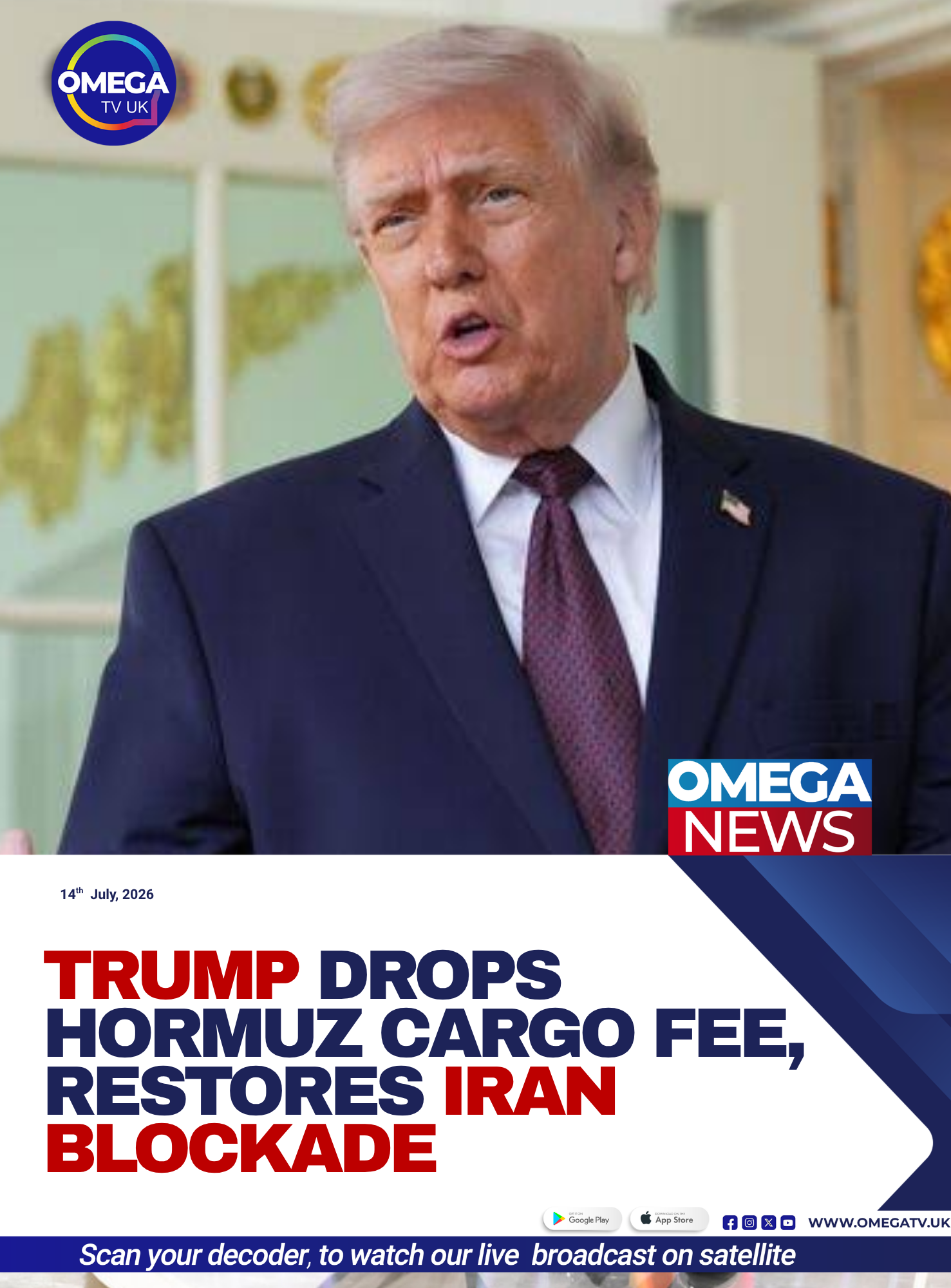
US President Donald Trump has reversed his decision to impose a 20% charge on cargo passing through the Strait of Hormuz, as Washington prepares to resume a blockade targeting Iranian ports.

Trump announced on Monday that ships using the key global oil route would face a fee as part of efforts to control maritime traffic linked to Iran. However, he later changed course, saying the proposed toll would be replaced with “trade and investment deals” involving Gulf countries.
The Strait of Hormuz remains one of the world’s most important shipping routes, with a significant portion of global energy supplies passing through the narrow waterway.
Trump’s announcement comes amid escalating tensions between the United States and Iran, following a series of military strikes and accusations between the two sides.
The US military said it had completed overnight strikes aimed at weakening Iran’s ability to target commercial shipping in the region.
Iran, meanwhile, has claimed responsibility for attacks on US-linked interests and said it targeted American bases in the region.
Iran’s Islamic Revolutionary Guard Corps (IRGC) also said it struck two UAE-linked tankers in the Strait of Hormuz. The United Nations maritime agency reported that at least two seafarers were killed in the attacks.
Earlier, Iranian state media reported explosions near two major port cities, Bandar Abbas and Bushehr, following another night of strikes between Washington and Tehran.
The US has said its actions are aimed at protecting commercial shipping and preventing attacks on vessels moving through the strategic waterway.
The planned blockade of Iranian ports is expected to increase pressure on Tehran, although questions remain over how it will affect international shipping and energy markets.
The Strait of Hormuz has long been a major point of tension between Iran and Western powers due to its importance to global oil and gas transportation.
The latest developments have raised concerns among regional governments and international shipping organisations, as continued military escalation could disrupt trade and increase energy prices worldwide.
With diplomatic tensions remaining high, Gulf states are closely watching the situation as Washington and Tehran continue their confrontation over control of the strategic waterway.