Trump says US to begin naval blockade of Iran’s ports in Strait of Hormuz amid global market shock

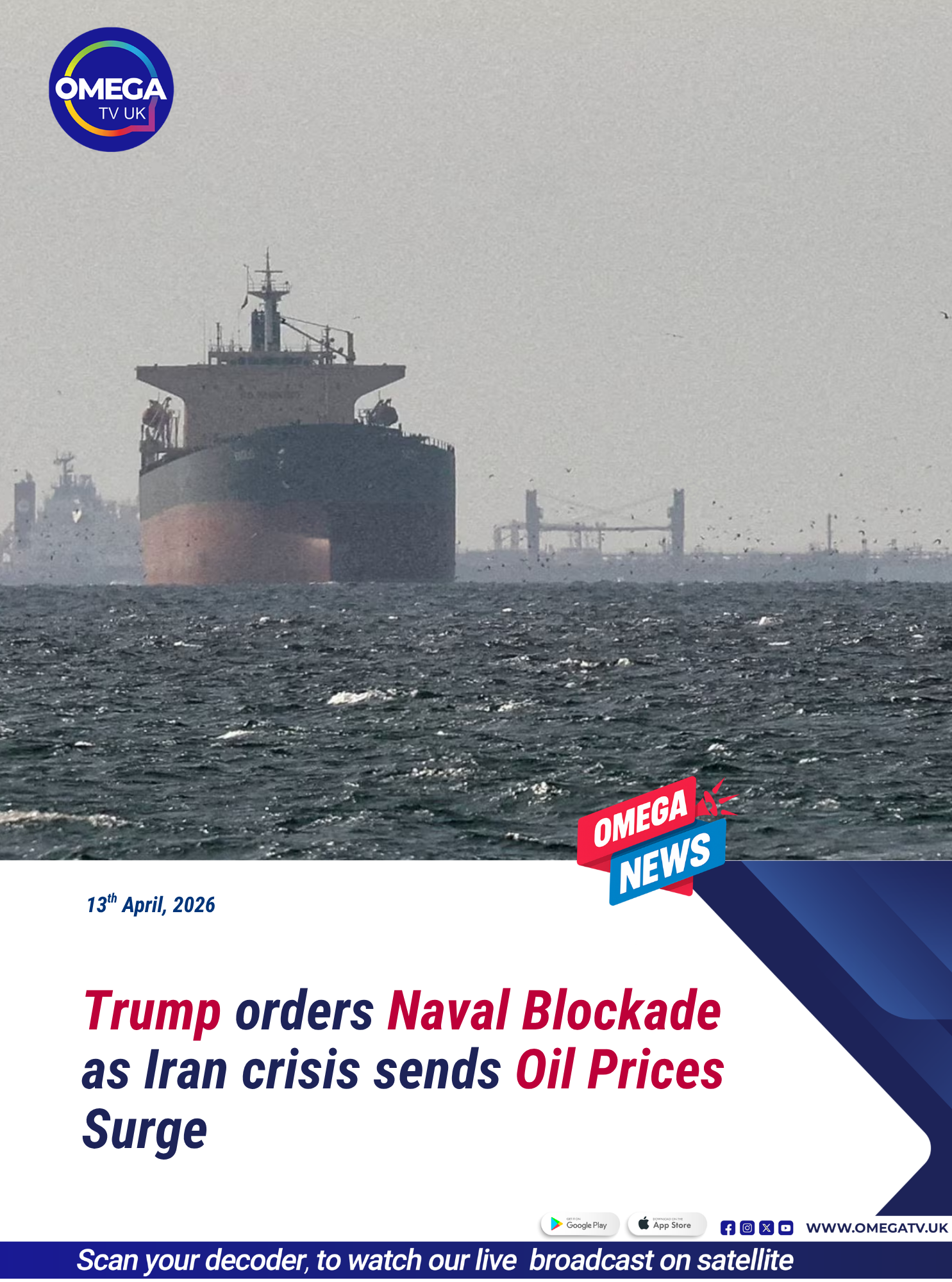
Global tensions escalated sharply on Monday after former US President Donald Trump announced that the United States would begin a naval blockade targeting Iranian ports connected to the Strait of Hormuz, triggering immediate shock across financial markets and raising fears of wider conflict.
Trump’s statement followed a breakdown in recent diplomatic efforts between the United States and Iran, with talks failing to produce any agreement on de-escalation or nuclear restrictions. The announcement signals a major intensification of the confrontation, with direct implications for global energy security.
The Strait of Hormuz is one of the world’s most critical shipping routes, carrying a significant share of global oil supplies. Any disruption in the area is expected to have immediate consequences for energy prices, shipping costs, and international trade stability.
In the hours after the announcement, oil markets reacted sharply. Brent crude surged to above $100 per barrel, marking a jump of more than 7% in a single session. Analysts say prices have now risen more than 40% since the conflict disrupted navigation routes through the region.
Equity markets also came under pressure, with European and US stock futures falling as investors moved toward safer assets. Government bond yields shifted lower in some markets, reflecting increased demand for stability amid geopolitical uncertainty.
Market analysts described the reaction as a classic “risk-off” response, where investors pull out of equities and move into safer investments such as gold and government debt during periods of crisis.
One strategist noted that the situation reflects heightened fears of escalation rather than a contained regional dispute, warning that further military developments could amplify volatility across global markets.
The announcement of a blockade has also raised concerns about the security of international shipping. Reports indicate that several oil tankers linked to Iran have already begun adjusting their routes, with some vessels exiting the Gulf region via the Strait of Hormuz ahead of expected enforcement actions.
Energy traders are closely monitoring movements in the area, as even minor disruptions could significantly affect global supply chains. The region is already considered one of the most sensitive geopolitical chokepoints in the world.
At the same time, political tensions have been compounded by a separate diplomatic controversy involving the Vatican. Trump also drew criticism after launching a verbal attack on Pope Leo XIV, describing him as “terrible” and “weak on nuclear weapons” following the Pope’s remarks condemning the escalation of the Iran conflict.
The Pope had previously urged world leaders to end what he described as the “madness of war,” warning that continued escalation could have catastrophic humanitarian consequences. His comments were widely interpreted as a rebuke of US military actions and rhetoric surrounding Iran.
Religious and political observers have expressed concern about the increasingly direct clash between global political leadership and religious institutions, noting that such exchanges are rare at this level of public confrontation.
Meanwhile, Iran has not yet formally responded to the blockade announcement, but officials have previously warned that any attempt to restrict access to its ports or maritime routes would be considered an act of war.
Regional analysts say the situation remains highly unstable, with multiple flashpoints capable of triggering further escalation. These include maritime security incidents, energy infrastructure vulnerabilities, and ongoing diplomatic breakdowns.
Despite the volatility, financial markets remain active, though with heightened caution. Traders are now pricing in a prolonged period of uncertainty, with energy security expected to dominate global economic discussions in the coming weeks.
The situation continues to evolve rapidly, with governments, military forces, and financial institutions all closely watching developments in and around the Strait of Hormuz.