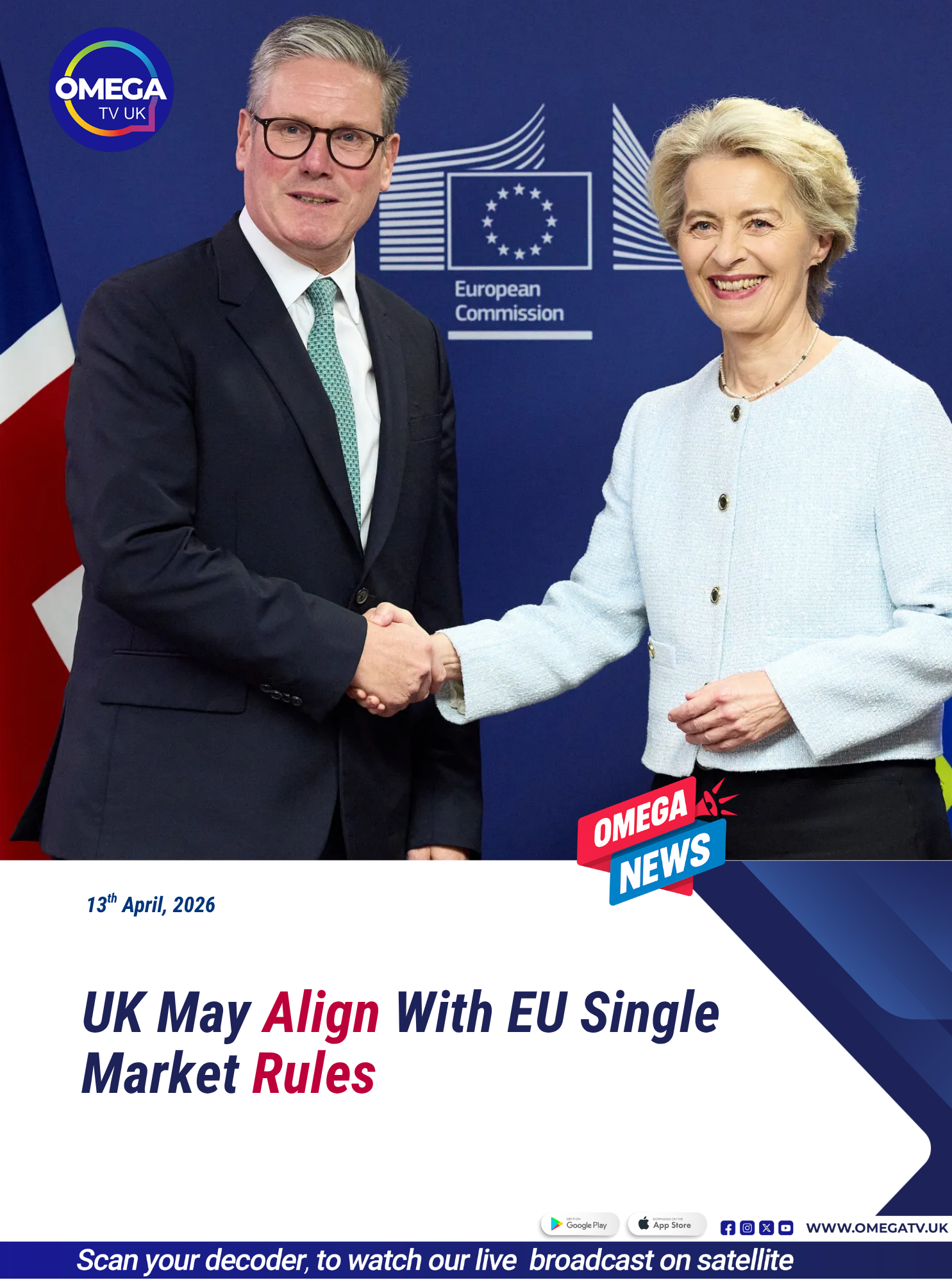
UK lawmakers to vote on EU alignment plans as Starmer defends closer Europe ties

Keir Starmer has confirmed that proposed changes to align parts of UK regulation with European Union rules will require parliamentary approval, as his government moves forward with efforts to reset post-Brexit relations with Europe.
The Prime Minister said lawmakers in the UK Parliament will vote on the main legislation underpinning the new approach, rejecting criticism that the government is turning Parliament into a “spectator” in shaping future rules.
The policy forms part of a broader strategy to strengthen ties between the UK and the European Union nearly a decade after Britain voted to leave the bloc in the 2016 referendum.
Starmer has repeatedly stated that his government is not seeking to rejoin the single market or restore free movement of goods, services, and people. However, he has emphasised the need for closer cooperation in areas such as trade, energy, defence, and security.
Speaking to BBC Radio, Starmer argued that the UK is operating in a world of “massive conflict” and uncertainty, and that closer cooperation with Europe is in the national interest.
He said the goal of the proposed legislation is to make trade easier, reduce barriers for businesses, and ultimately lower costs for consumers. According to him, smoother regulatory alignment would help strengthen economic performance and improve supply chains.
However, the plans have triggered political controversy at home, particularly among Brexit supporters who argue that the UK is gradually drifting back toward EU influence without a clear democratic mandate.
A government spokesperson clarified that while Parliament will vote on the primary legislation, certain regulatory updates could be managed through what is known as “secondary legislation.” This would allow ministers to adjust specific rules—such as food standards and environmental regulations—to remain aligned with EU changes over time.
Secondary legislation typically gives ministers authority to implement policy changes that have already been approved in principle by Parliament. Critics argue this process reduces scrutiny, as it limits opportunities for MPs to amend or block individual regulations.
Conservative Party business spokesperson Andrew Griffith strongly criticised the approach, claiming it would reduce Parliament’s role to that of an observer while EU regulations effectively shape UK law.
He argued that the government risks undermining sovereignty and accused Labour of using Europe-focused policy as a distraction from domestic economic challenges.
In response, Labour sources defended the proposal, saying it reflects a sovereign decision to reduce trade barriers and improve economic cooperation with Europe. They insisted that all major treaties and agreements will still be subject to parliamentary scrutiny and approval.
Supporters of the policy argue that closer regulatory alignment with the EU could make trade smoother and more predictable for UK businesses, particularly exporters who rely heavily on European markets.
Business groups have long called for reduced friction in post-Brexit trade, citing increased paperwork, delays at borders, and additional compliance costs since the UK formally left the EU.
However, critics warn that dynamic alignment with EU rules risks limiting the UK’s ability to set independent standards in key areas, potentially weakening the long-term benefits of Brexit.
The debate comes amid broader public reflection on Brexit’s impact. Opinion polls suggest that a significant portion of the British public now regrets the 2016 vote to leave the EU, although there remains strong opposition to any formal return to membership.
The government has been careful to avoid framing the policy as a reversal of Brexit, instead describing it as a pragmatic adjustment to improve trade and cooperation while maintaining sovereignty.
Starmer’s approach reflects a balancing act between economic priorities and political sensitivities. While seeking closer ties with Europe, he must also manage divisions within Parliament and among voters who remain deeply attached to Brexit’s original goals.
As the legislation moves forward, it is expected to face intense debate in both the House of Commons and the House of Lords, particularly over the extent of ministerial power and the role of parliamentary oversight.
Ultimately, the outcome will help define the UK’s future relationship with the EU—not as a member, but as a close trading partner navigating a complex post-Brexit landscape.