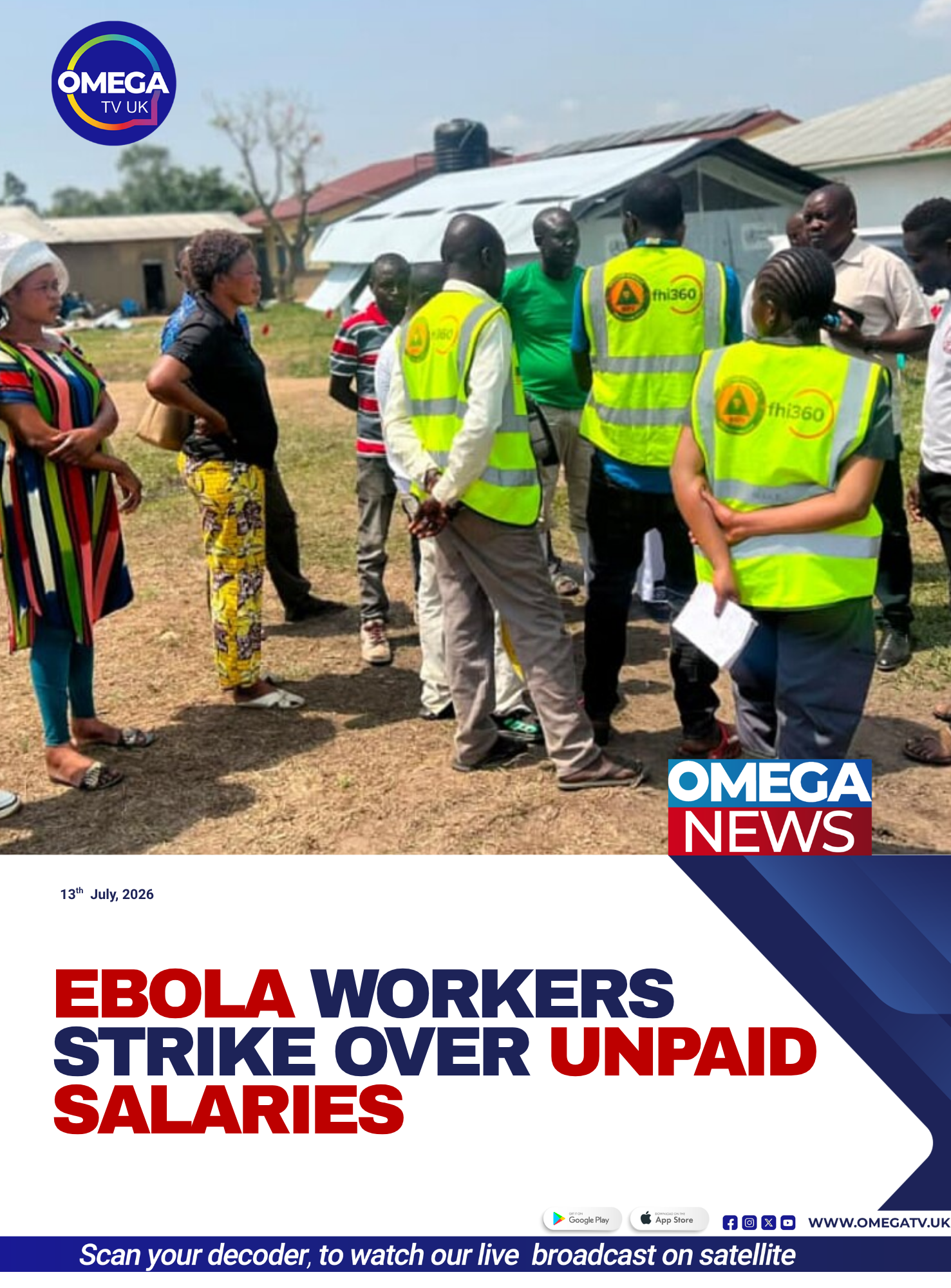
Dozens of workers at an Ebola treatment centre in northeastern Democratic Republic of Congo (DRC) have gone on strike over unpaid salaries and allowances, raising concerns about the country’s response to the deadly outbreak.

The protest took place on Monday at the Ebola treatment centre based at Rwampara General Hospital. Angry workers blocked the road leading to the facility and burned tyres outside the hospital’s main entrance, bringing operations to a standstill.
The striking workers include epidemiologists, case investigators, drivers, burial teams and community awareness staff, all of whom say they have not received their wages since the outbreak was officially declared in May.
Some healthcare workers and field teams had already begun a strike last week, accusing Congolese authorities of neglecting frontline staff who are risking their lives to contain the disease.
“We are burying people who have been in their homes for four days, and you can clearly see they died from Ebola,” said burial team member John Bahati Nguna.
“We are burying people in plastic bags to protect ourselves. Now they are coming from Kinshasa, claiming to be the bosses, and staying in hotels. They eat well, they sleep well and don’t even know what’s happening on the ground,” he added.
The frustration among health workers has been growing as the outbreak continues to spread.
“We haven’t been paid. It’s been 45 days,” said community awareness worker Olivier Duciel. “With great bitterness, we haven’t been paid.”
The Democratic Republic of Congo declared the latest Ebola outbreak on May 15 after the virus had already been spreading undetected for several weeks, according to the World Health Organization (WHO).
The current outbreak is caused by the rare Bundibugyo strain of the Ebola virus, which is particularly concerning because there is currently no approved vaccine or specific treatment for this variant.
Ebola is a severe and often deadly disease that spreads through direct contact with the bodily fluids of infected individuals. Symptoms include fever, vomiting, diarrhoea and internal bleeding.
Health experts have warned that disruptions to response efforts, including strikes by frontline workers, could further complicate efforts to contain the outbreak.
The Democratic Republic of Congo has experienced several Ebola outbreaks over the years and has developed considerable experience in responding to the disease. However, limited resources, poor healthcare infrastructure and security challenges continue to hamper response efforts.
The strike has also highlighted growing tensions between workers on the ground and officials overseeing the emergency response.
Frontline staff argue that they are putting their lives at risk without adequate support or compensation, while authorities have yet to provide a timeline for the payment of outstanding salaries.
As the outbreak continues, there are fears that delays in paying health workers could undermine community trust and weaken efforts to stop the spread of the virus.
For now, the future of the treatment centre’s operations remains uncertain as workers demand immediate action from the government.