Demi Moore Says Fighting AI in Hollywood Is a ‘Losing Battle’
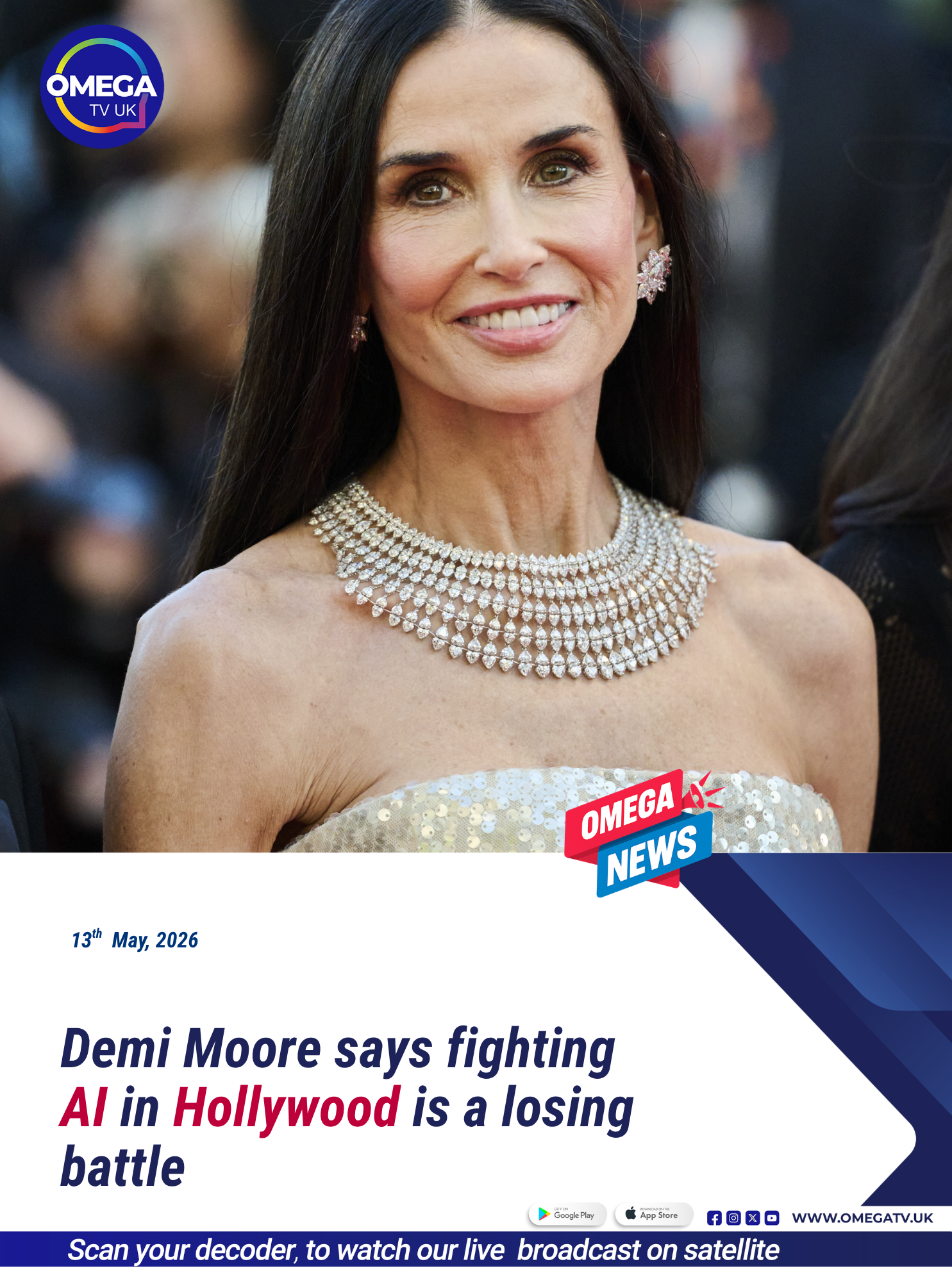
American actress and producer Demi Moore has shared her thoughts on the growing role of artificial intelligence in Hollywood, warning that resisting the technology entirely is unrealistic.
Moore made the comments during the opening day press conference of the 2026 Cannes Film Festival in France, where she is serving as a jury member this year.
During the press event, the 63-year-old actress was asked about the increasing use of AI in the entertainment industry and whether Hollywood should be concerned about its long-term impact.
“AI is here, and so to fight it is, in a sense, to fight something that is a battle that we will lose,” Moore said.
Rather than opposing the technology outright, Moore argued that the more practical path is learning how to integrate AI responsibly while protecting the creative industries.
“So to find ways in which we can work with it, I think, is a more valuable path to take,” she added.
Artificial intelligence has become one of the most debated topics in Hollywood, with ongoing conversations around its use in screenwriting, visual effects, voice replication, editing, and even digital performances.
Concerns have grown among actors, writers, and filmmakers over how AI could affect jobs, originality, intellectual property, and the future of creative ownership.
When asked whether enough is being done to protect human artistry, Moore admitted she does not believe the industry currently has sufficient answers.
“Are we doing enough to protect ourselves? I don’t know. I don’t have the answer to that,” she said. “My inclination would be to say probably not.”
Still, Moore emphasized that despite AI’s growing capabilities, it cannot replace the essence of real art.
According to her, what makes performances, films, and music meaningful goes far beyond technical execution.
“There’s beautiful aspects of being able to utilize it, but the truth is, there really isn’t anything to fear,” Moore explained.
She argued that authentic creativity comes from something deeper than data or software.
“What it can never replace is what true art comes from,” she said. “It comes from the soul. It comes from the spirit.”
Moore suggested that while AI can imitate style, generate content, and improve efficiency, it cannot genuinely replicate human emotional experience or artistic intention.
Her remarks reflect a growing middle-ground perspective emerging in the entertainment industry: acknowledging AI’s permanence while advocating for stronger safeguards around human creativity.
The actress, known for major films including Ghost, G.I. Jane, and more recently The Substance, joins a growing list of celebrities speaking publicly about the future of AI in film and television.
Debates around AI intensified in recent years during major Hollywood labor disputes, where actors and writers pushed for protections against unauthorized digital likeness use and AI-generated scripts.
Supporters of AI argue it can improve workflows, reduce costs, and unlock new creative possibilities. Critics, however, warn that overreliance on the technology could weaken originality and displace creative workers.
Moore acknowledged both sides of the discussion but ultimately framed adaptation as necessary.
Her comments suggest that the question is no longer whether AI belongs in Hollywood, but how the industry can manage its presence without undermining the human foundation of storytelling.
As AI continues to reshape entertainment, Moore believes the unique emotional connection between artists and audiences remains irreplaceable.
That connection, she argues, is what gives art its lasting power.
“No technology can recreate that,” her remarks imply.
While Hollywood continues navigating the opportunities and risks of AI, Moore’s message was clear: resisting the technology may be futile, but protecting the human spirit behind art remains essential.