Iran Gunboats Fire on Tanker as Strait of Hormuz Tensions Surge Again

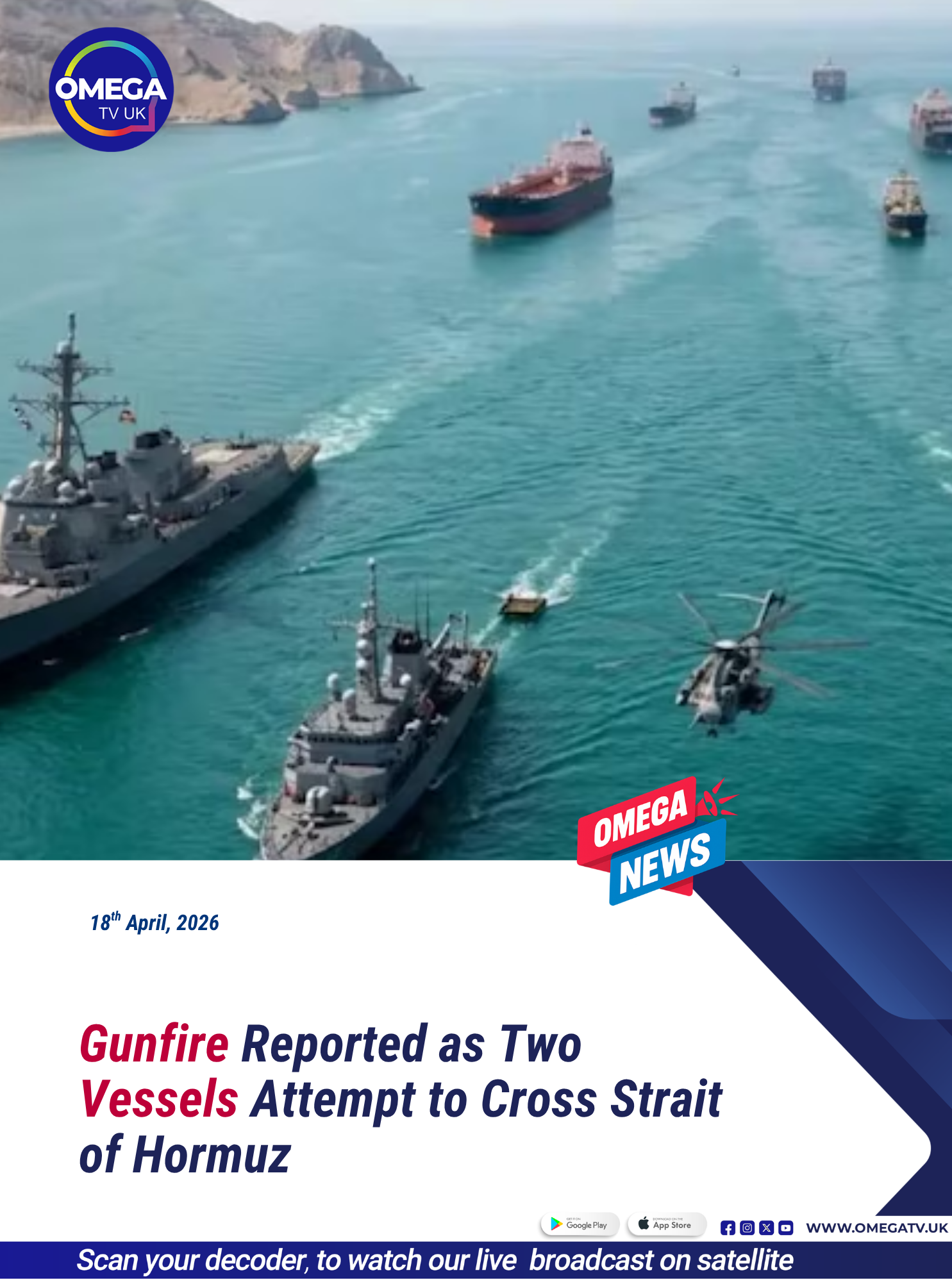
Tensions in the Strait of Hormuz have escalated again after reports that Iranian military gunboats opened fire on a commercial tanker, even as a convoy of oil vessels was seen attempting to cross the vital shipping route following conflicting claims about its reopening.
According to maritime monitoring sources, at least one tanker came under fire from two Iranian Islamic Revolutionary Guard Corps (IRGC) gunboats while transiting the area near the Strait of Hormuz. Shipping security alerts indicated the incident occurred in waters close to Oman, raising fresh fears for global oil traffic passing through one of the world’s most important energy corridors.
No major injuries or damage have yet been independently confirmed, and officials have not released full details of the vessel involved. However, shipping agencies reported heightened risk conditions in the waterway, with several merchant ships either slowing down, diverting, or requesting naval guidance after the incident.
The reported attack comes at a time of extreme confusion over control of the Strait of Hormuz. Earlier in the day, vessel tracking data showed a convoy of oil tankers moving through the strait after Iran announced that the waterway had been reopened for commercial shipping. The convoy reportedly included crude oil carriers, chemical tankers and liquefied gas vessels, all attempting to exit the Gulf under the fragile ceasefire arrangement.
Iran’s earlier announcement suggested a temporary easing of restrictions, following weeks of disruption linked to its conflict with the United States and Israel. The Strait, which handles around a fifth of global oil and liquefied natural gas trade, has been a central flashpoint in the wider regional crisis.
However, the situation remains highly unstable. Within hours of reports of reopening, conflicting statements emerged from Iranian and U.S. officials over whether the ceasefire conditions were still holding. Some vessels reportedly turned back after receiving warnings or radio messages suggesting renewed restrictions, while others attempted to push through the passage.
U.S. President Donald Trump has also added to the uncertainty, warning that he may end the ceasefire agreement entirely unless a long-term peace deal with Iran is reached before the current truce expires on Wednesday. Washington has maintained that maritime security in the region remains under threat and has previously imposed restrictions linked to Iranian naval activity.
Iran, meanwhile, has repeatedly said it will respond strongly to what it describes as hostile actions, including naval pressure and blockades affecting its ports. Officials in Tehran have insisted that the Strait remains under Iranian control and that its status depends on compliance with broader ceasefire terms.
The latest reported gunboat incident has reignited fears of renewed disruption to global energy supplies. Even brief interruptions in the Strait of Hormuz can significantly affect oil prices and shipping insurance costs, given that the route is the primary export corridor for Gulf producers including Saudi Arabia, Iraq, and the United Arab Emirates.
Maritime analysts say the situation on the ground is changing rapidly, with shipping companies struggling to interpret conflicting signals from both Washington and Tehran. Some vessels are now reportedly waiting outside the Gulf for clearer instructions before attempting passage.
The Strait has been repeatedly closed, reopened, and partially restricted over recent weeks, reflecting the volatile nature of the wider Iran conflict. Each shift has had immediate effects on global energy markets, adding pressure to already fragile supply chains.
For now, shipping traffic continues under heavy uncertainty, with naval escorts, warning alerts, and ad hoc routing becoming increasingly common. International observers warn that unless a stable agreement is reached soon, the Strait of Hormuz could remain a persistent flashpoint in the escalating geopolitical crisis.