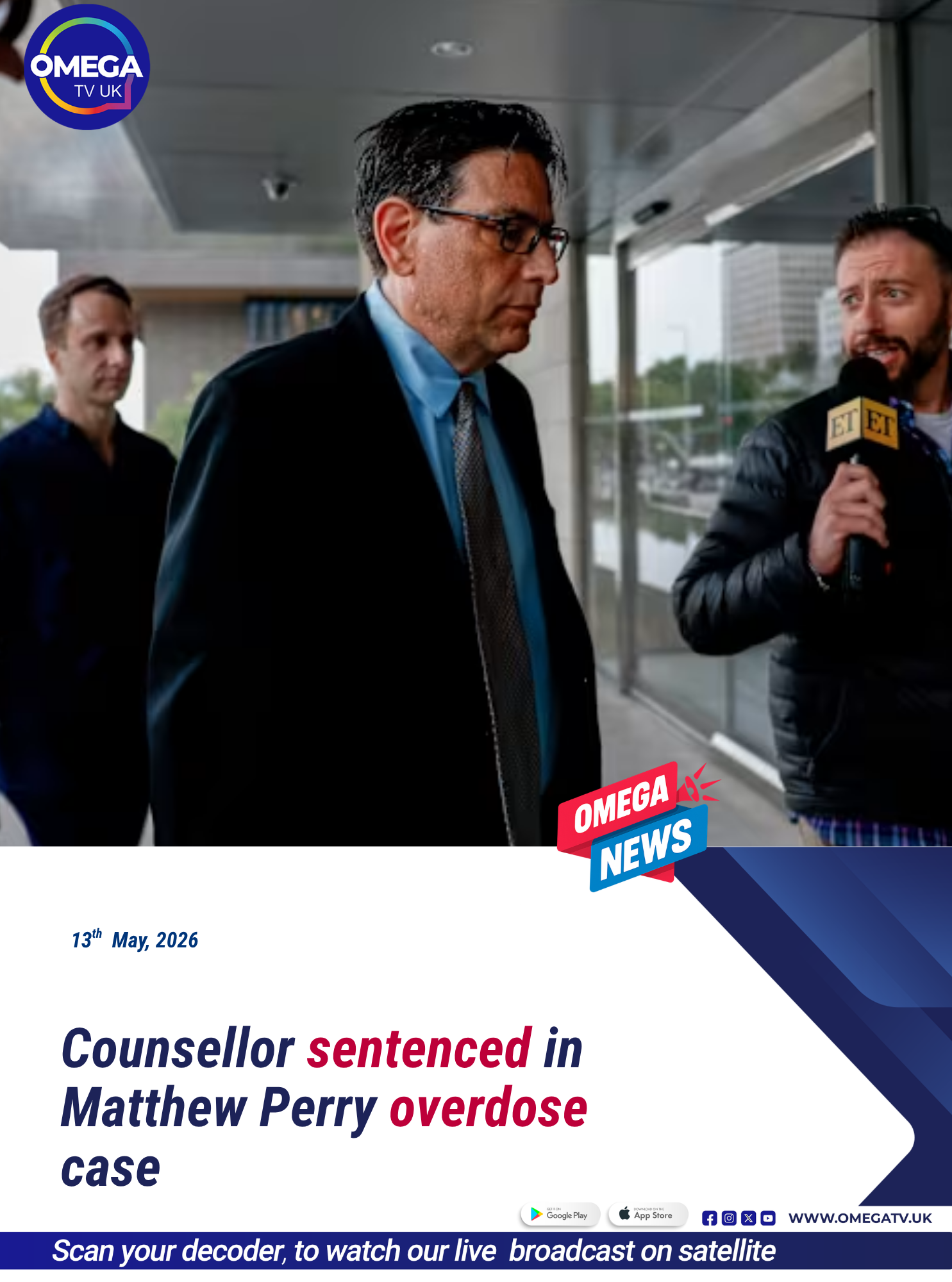
Drug counsellor sentenced in Matthew Perry overdose case
A drug addiction counsellor linked to the overdose death of Friends star Matthew Perry has been sentenced to two years in prison in the latest development in the high-profile federal case surrounding the actor’s death.

According to US media reports, Erik Fleming, 56, was sentenced after pleading guilty in August 2024 to one count of conspiracy to distribute ketamine. Federal prosecutors said Fleming played a role in supplying the surgical anesthetic to Perry by sourcing it from a Los Angeles dealer known as the “Ketamine Queen.”
In addition to the prison term, a federal judge ordered Fleming to serve three years of supervised release following his sentence and pay a $200 financial penalty.
Perry was found dead in the jacuzzi of his Southern California home in October 2023. Authorities later ruled that his death was caused by the acute effects of ketamine, a drug medically used as an anesthetic but also misused recreationally and in unregulated settings.
Fleming is one of five individuals charged in connection with Perry’s death. Prosecutors allege the group exploited the actor’s well-documented struggles with addiction by supplying him with ketamine for profit.
During Wednesday’s sentencing, Fleming reportedly expressed remorse in court, telling Judge Sherilyn Peace Garnett that he has been deeply affected by the consequences of his actions.
“It’s truly a nightmare I can’t wake up from,” Fleming said, according to the Associated Press. “I’m haunted by the mistakes I made.”
In legal filings submitted before sentencing, Fleming’s lawyers argued for leniency, requesting a sentence of three months in prison followed by nine months in a residential drug treatment facility. Prosecutors, however, had pushed for a longer sentence of two and a half years.
In a letter written to the judge earlier this year, Fleming admitted responsibility and described his involvement as the “biggest mistake” of his life.
“I made the biggest mistake of my life, and I am so deeply sorry for the hurt I have caused,” he wrote.
Fleming also said he was overwhelmed by grief and shame after learning of Perry’s death. He admitted that he supplied the ketamine partly for financial gain and under the belief that he was helping a friend.
He apologized for what he called “inexcusable behavior” and said he hoped his sentence would bring some sense of justice to Perry’s loved ones.
“I hope my sentence provides some measure of justice and peace for everyone who loved Matt,” he wrote.
Authorities say Fleming was part of a larger network that included doctors, drug suppliers, and Perry’s personal assistant. Investigators allege the group took advantage of Perry’s vulnerability and addiction issues in order to profit from repeated drug transactions.
The case has drawn significant public attention because of Perry’s global fame and long history of publicly discussing his battle with addiction. The actor was widely known for his role as Chandler Bing on the hit sitcom Friends.
Fleming is the fourth of five defendants to be sentenced in the years-long legal case.
Last month, Jasveen Sangha, the Los Angeles drug dealer nicknamed the “Ketamine Queen,” was sentenced to 15 years in prison after being found responsible for supplying drugs linked to Perry’s death.
Another defendant, Dr. Salvador Plasencia, was sentenced in December to 30 months in prison for providing Perry with ketamine in the weeks leading up to his death.
Dr. Mark Chavez, another California physician involved in the case, received eight months of home detention and three years of supervised release after pleading guilty.
The final remaining defendant, Kenneth Iwamasa, Perry’s live-in assistant, is scheduled to be sentenced on 27 May after pleading guilty to conspiracy to distribute ketamine causing death. Prosecutors say he injected Perry with the drug before the actor’s fatal overdose.
The case continues to highlight growing concerns around ketamine misuse, celebrity exploitation, and the role of medical professionals in controlled substance distribution.